Nine brands dominate the perimenopause supplement shelf, and they are not doing the same thing as each other. Three are phytoestrogen products. Two are broad multivitamins. One is a probiotic sold for weight. One is a PMS formula marketed upward into perimenopause. Sorting them by what they are built around is far more useful than sorting them by review count. Here is the map.
The phytoestrogen group
These work — to the extent they work — by putting weak plant estrogens into a system that is short of its own. If you have or have had a hormone-sensitive cancer, or you take tamoxifen, everything in this group is an oncology conversation rather than a shelf decision.
- Promensil — red clover isoflavones, sold at two strengths. The most single-minded product in the category: it is isoflavones and little else. Evidence for hot flashes is weak and inconsistent.
- Estroven — soy isoflavones plus black cohosh 40 mg, with cissus quadrangularis in the perimenopause and weight-management lines. US drugstore staple. Black cohosh carries liver-injury case reports.
- Femarelle — built around DT56a, a tofu-derived soy extract that has been studied as a selective estrogen receptor modulator, with flaxseed, vitamins and minerals. Sold in three variants by life stage. It has a small but real clinical literature behind it, which is more than most of this shelf can say.
The broad multivitamin group
One capsule, many ingredients, small amounts of each. The logic is coverage rather than potency, which is a reasonable bet if you do not know what is short.
- Vitabiotics Menopace — the UK's biggest seller. Menopace Original is a 22-nutrient one-a-day including 20 mg of soy isoflavone extract; the Plus and Max versions add more. Note the isoflavones are in there even in the base product, which people often miss.
- Health & Her Perimenopause — magnesium, vitamin C, wild yam, zinc, iron, ashwagandha, sage, maca, lavender, red clover, B6, Siberian ginseng, ginkgo, B12 and D3. Broad, and it contains both iron and red clover, so it is worth reading the label rather than assuming. We compared it in detail in MYNDR vs Health & Her.
The ones that sit on their own
- Amberen — a 400 mg proprietary blend of succinates, glycine and monosodium glutamate, plus vitamin E and B vitamins. No herbs, no hormones, no soy, which makes it the usual recommendation for women avoiding phytoestrogens. The amounts inside the blend are not disclosed. Full comparison: MYNDR vs Amberen.
- Provitalize — three probiotic strains (L. gasseri, B. breve, B. lactis) with turmeric, moringa, curry leaf and bioperine, sold squarely on menopausal weight loss. The strain research is mostly animal work, and the weight claim is the weakest part. We went through the probiotic evidence in probiotics for perimenopause.
- FLO (O Positiv) — vitamin B6 20 mg with chasteberry, lemon balm and dong quai. This is a PMS formula. Chasteberry's evidence is for PMS and cyclical breast pain, not for menopause. It is a perfectly sensible product being sold one life stage too late.
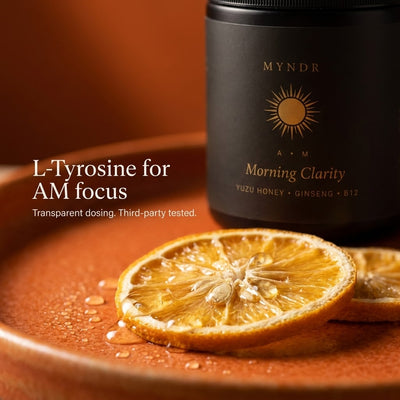
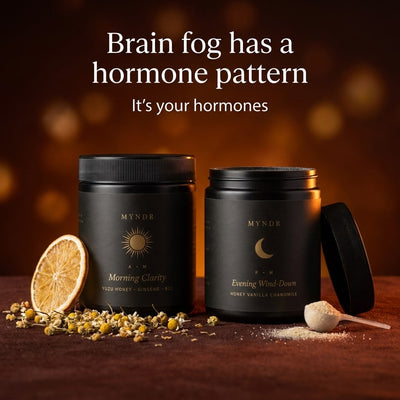
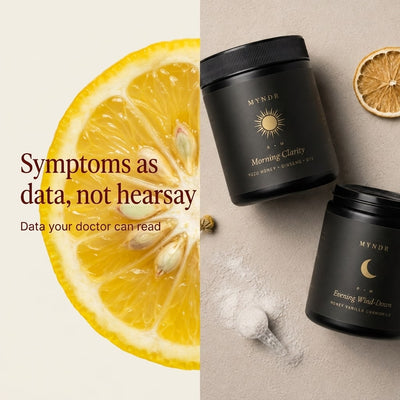
- MYNDR — two powders rather than a capsule, and the only one in this list built around cognition and sleep rather than hot flashes. AM: L-tyrosine 300 mg, L-theanine 150 mg, Panax ginseng 150 mg, caffeine 50 mg, B12 1000 mcg, B6 15 mg, vitamin C 100 mg, electrolytes. PM: glycine 3000 mg, magnesium glycinate 200 mg, L-theanine 150 mg, lemon balm 150 mg, chamomile 100 mg, GABA 100 mg, ashwagandha 50 mg. No phytoestrogens, so nothing in it addresses hot flashes.
Sorted by what is actually bothering you
| Main complaint | Where to look first |
|---|---|
| Hot flashes, night sweats | Estroven, Promensil, Femarelle — or Amberen if avoiding phytoestrogens |
| Brain fog, word-finding, focus | MYNDR |
| Sleep, 3am waking | MYNDR, or magnesium glycinate on its own |
| Everything a bit, nothing specific | Menopace, Health & Her |
| Heavy bleeding, fatigue | A ferritin test first, then iron if indicated |
| Weight | None of them. This is a sleep, strength and protein problem |
| PMS-type cyclical symptoms | FLO, or chasteberry on its own |
Where these are sold
It matters less than the label does, but for completeness. Boots, Holland & Barrett and Superdrug carry the UK brands — Menopace, Health & Her, Promensil. Walgreens, CVS, Target and Walmart carry the US ones — Estroven and Amberen. Amazon carries nearly all of them, which is also where counterfeit and expired stock is most common; buy from the brand's own storefront if you buy there at all. MYNDR is direct only, from myndr.shop.
Four things worth checking on any of them
- Is it a proprietary blend? If the amounts are hidden, you cannot compare the dose to anything.
- Does it contain phytoestrogens? Soy isoflavones, red clover, wild yam, flaxseed and black cohosh all count. Half this shelf does.
- Does it contain iron? Do not take iron on spec. Get ferritin tested.
- What does it interact with? Ginkgo with anticoagulants, black cohosh with liver-relevant medication, chasteberry with hormonal treatment. Take the bottle to a pharmacist.
The short version
- Promensil, Estroven and Femarelle are phytoestrogen products, aimed at hot flashes.
- Menopace and Health & Her are broad multis — wide coverage, small doses, and both contain things you may not want by default.
- Amberen is the non-herbal option, sold behind a proprietary blend.
- Provitalize is a probiotic with a weight claim the evidence does not support.
- FLO is a PMS formula being marketed into perimenopause.
- MYNDR is the cognition and sleep option, and does nothing for hot flashes.
- Match the product to your loudest symptom. Nothing here treats all of them.
All brand names are the trademarks of their respective owners. MYNDR is not affiliated with, endorsed by or sponsored by any of them. Formulations and product lines change — check the current label before buying. This article is general information, not medical advice. These statements have not been evaluated by the Food and Drug Administration. This product is not intended to diagnose, treat, cure or prevent any disease.