
Best overall: no supplement earns that title for perimenopause insomnia. Best for a delayed sleep schedule: melatonin. Best for correcting inadequate magnesium intake: magnesium. This 2026 guide ranks seven options by their fit, evidence, and safety—not by promises on the bottle.
- The best supplements for perimenopause sleep depend on whether your problem is sleep timing, night sweats, or persistent insomnia.
- Melatonin fits sleep-timing problems better than repeated nighttime waking; magnesium is most relevant when intake is inadequate.
- Glycine and L-theanine have limited sleep evidence; neither is an established treatment for perimenopause insomnia.
- Myndr offers AM/PM cognitive support for perimenopausal women; its purpose differs from a single-ingredient sleep supplement.
Why this matters
Perimenopause sleep disruption is not one condition. Night sweats, trouble falling asleep, repeated waking, and sleep apnea require different responses. A supplement that changes sleep timing does not necessarily address hot flashes or breathing interruptions.
Myndr sells an AM/PM cognitive-support supplement system with a free symptom tracker app for perimenopausal women aged 35–50. That description establishes its audience and purpose; it does not establish that the formula treats insomnia.
For persistent insomnia, cognitive behavioral therapy for insomnia, or CBT-I, is a first-line treatment. Loud snoring, gasping, or significant daytime sleepiness deserves medical assessment rather than another sleep supplement.
What makes the best perimenopause sleep supplement in 2026?
Use these criteria before choosing an ingredient:
- Symptom fit: Separate delayed sleep timing from night sweats and nighttime waking.
- Relevant evidence: A general sleep study does not establish a benefit specifically during perimenopause.
- Ingredient clarity: Read the amount of every active ingredient, not just the blend name.
- Safety: Check interactions, kidney or liver conditions, and next-day sedation.
- Product quality: Independent testing helps assess contents; it does not prove a sleep benefit.
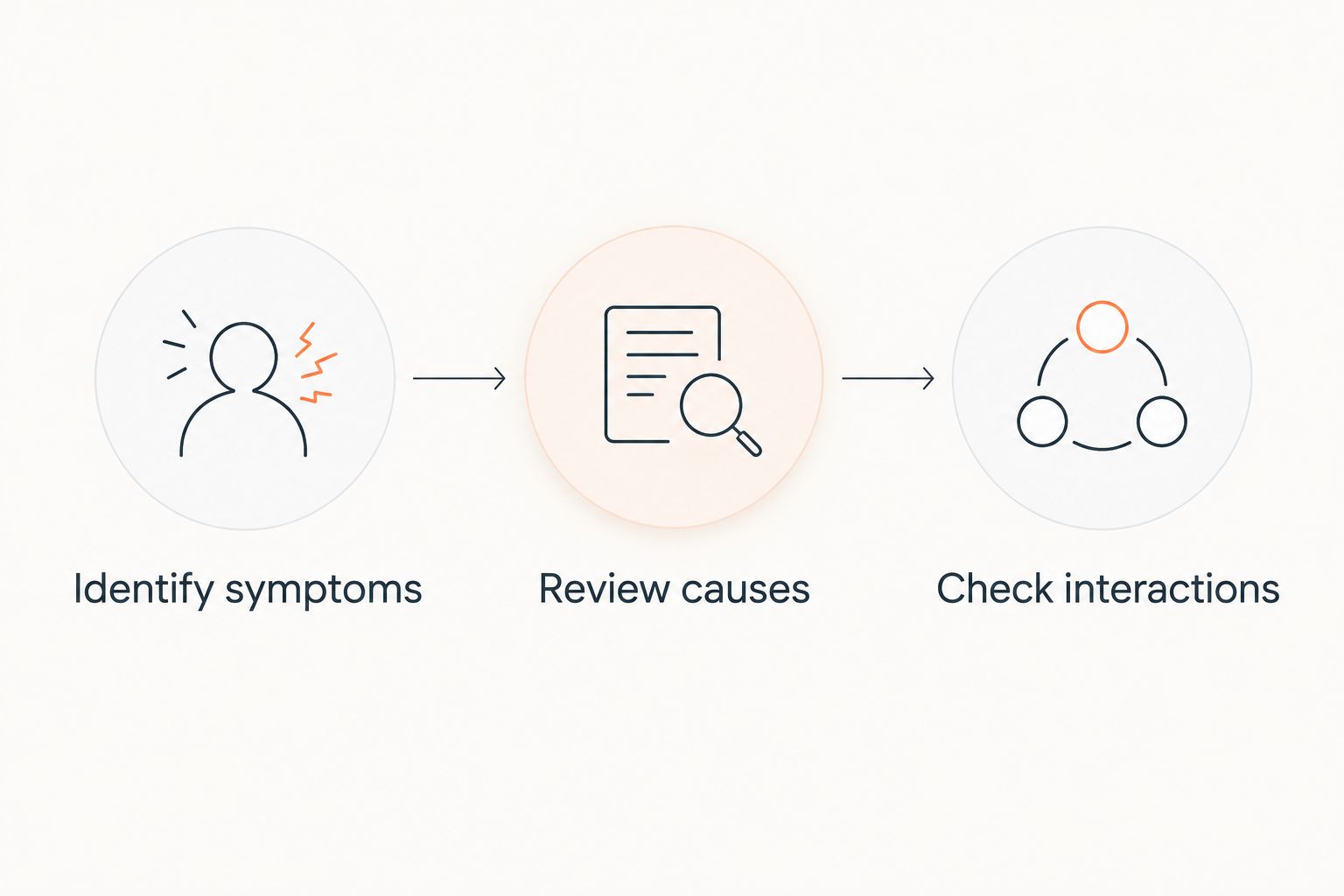
Start with a short decision sequence:
- Identify symptoms: Record whether you struggle to fall asleep, wake sweating, or wake without an obvious trigger.
- Review causes: Discuss persistent symptoms, medication effects, and possible sleep disorders with a clinician.
- Check interactions: Ask a pharmacist to review the exact supplement before adding it.
Seven sleep supplements at a glance in 2026
| Rank | Option | Best for | Standout feature | Key limitation |
|---|---|---|---|---|
| 1 | Melatonin | Delayed sleep timing | Acts on the body's sleep-timing signal | Not a default treatment for chronic insomnia |
| 2 | Magnesium | Inadequate magnesium intake | Addresses an essential mineral need | Sleep benefits are not established for everyone |
| 3 | Glycine | Discussing an experimental single ingredient | Studied in small sleep trials | Limited evidence, especially in perimenopause |
| 4 | L-theanine | Evaluating relaxation-focused support | Studied for relaxation and sleep outcomes | Not an established insomnia treatment |
| 5 | Valerian | Reviewing an existing herbal sleep product | Longstanding use as a sleep herb | Inconsistent effectiveness evidence |
| 6 | Soy isoflavones | Separating hot-flash claims from sleep claims | Studied mainly around menopausal symptoms | Not a dependable sleep treatment |
| 7 | Black cohosh | Scrutinizing menopause supplement claims | Studied for menopausal symptoms | Uncertain benefit and liver safety concerns |
1. Melatonin: best for delayed sleep timing
Melatonin is a hormone involved in signaling biological nighttime. It fits a sleep-timing problem better than the assumption that every nighttime awakening needs a sedative. Timing matters, so discuss its use rather than simply taking it whenever you feel tired.
Melatonin pros:
- Has an established role in circadian timing.
- Offers a single-ingredient option.
- Has research relevant to certain sleep-timing disorders.
Melatonin cons:
- Evidence does not support routine use for adult chronic insomnia.
- Can cause daytime drowsiness and interact with medicines.
Best for: A delayed sleep schedule assessed with a clinician. Verdict: Hold until the timing problem is clear.
2. Magnesium: best for inadequate intake
Magnesium supports normal nerve and muscle function, but that does not make it a proven sleep remedy. NIH guidance sets recommended daily intake for adult women at 310–320 mg, depending on age. The adult upper limit from supplements and medications is 350 mg per day; magnesium naturally present in food does not count toward that limit.
Magnesium pros:
- Addresses a recognized nutritional need.
- Intake can be reviewed alongside your diet.
- Food sources provide an alternative to supplementation.
Magnesium cons:
- Supplements can cause diarrhea and abdominal cramping.
- Kidney disease requires particular caution; magnesium also interacts with certain medicines.
Best for: Low intake or a deficiency addressed with professional guidance. Verdict: Hold unless there is a nutritional reason to use it.
3. Glycine: best for an experimental single-ingredient discussion
Glycine is an amino acid studied in small trials of sleep quality. Those studies do not establish it as a treatment for perimenopause insomnia. Keep the distinction between an interesting research signal and a dependable clinical benefit.
Glycine pros:
- Allows a focused discussion about one ingredient.
- Has preliminary human sleep research.
- Avoids the complexity of a multi-herb blend when used alone.
Glycine cons:
- Studies are small and do not establish perimenopause-specific effectiveness.
- Optimal use and longer-term sleep benefits remain uncertain.
Best for: A clinician-led discussion after more established approaches. Verdict: Wait; it is not a first-choice treatment.
4. L-theanine: best for evaluating relaxation-focused support
L-theanine is an amino acid found in tea. Research has examined relaxation and sleep-related outcomes, but feeling calmer is not the same as treating insomnia. Check whether a product contains caffeine or other ingredients that change its suitability at bedtime.
L-theanine pros:
- Has human research on relaxation-related outcomes.
- Is identifiable as a single ingredient.
- Lets you distinguish relaxation support from sedation claims.
L-theanine cons:
- Evidence does not establish a treatment for perimenopause insomnia.
- Combination products make individual effects harder to assess.
Best for: Reviewing a relaxation-focused product with a clinician. Verdict: Wait if your main problem is persistent nighttime waking.
5. Valerian: best for reviewing an existing herbal sleep product
Valerian is sold as an herbal sleep aid. Research results are inconsistent, and the American Academy of Sleep Medicine advises against its use for adult chronic insomnia. A familiar herbal name is not proof of effectiveness.
Valerian pros:
- Has been studied in human sleep research.
- Its ingredient name is easy to identify on labels.
- Can be reviewed separately from combination sleep blends.
Valerian cons:
- Evidence does not establish dependable insomnia relief.
- Sedating effects are a concern alongside alcohol or sedating medicines.
Best for: Checking a product you already use, rather than choosing a new default. Verdict: Skip for routine insomnia treatment.
6. Soy isoflavones: best for checking hot-flash claims
Soy isoflavones are plant compounds studied for menopausal symptoms. Evidence about hot flashes cannot automatically support a claim about sleep. Menopause Society guidance does not recommend soy extracts as an evidence-based treatment for vasomotor symptoms.
Soy isoflavones pros:
- Have menopause-related research.
- Address a different proposed target than sleep timing.
- Provide an identifiable ingredient category for label review.
Soy isoflavones cons:
- Do not establish reliable relief from perimenopause insomnia.
- Soy allergy and personal medical history affect suitability.
Best for: Evaluating menopause symptom claims critically. Verdict: Skip as a primary sleep supplement.
7. Black cohosh: best for scrutinizing menopause claims
Black cohosh appears in menopause supplements, but research findings vary across preparations. NCCIH also describes reports of serious liver damage in people taking products labeled as black cohosh; whether black cohosh caused those cases remains unclear.
Black cohosh pros:
- Has been studied for menopausal symptoms.
- Has publicly available safety information.
- Can be identified during a medication-and-supplement review.
Black cohosh cons:
- Evidence does not establish a dependable sleep benefit.
- Liver safety reports warrant caution rather than casual self-treatment.
Best for: A careful review of an existing menopause blend. Verdict: Skip as a default sleep choice.
How these options were ranked
This 2026 ranking prioritizes symptom fit, established clinical guidance, evidence limitations, and safety. The source framework includes NIH Office of Dietary Supplements magnesium guidance, NCCIH supplement summaries, American Academy of Sleep Medicine insomnia guidance, and Menopause Society guidance on vasomotor symptoms. It is not a head-to-head product trial.
Which option should you choose in 2026?
Choose an assessment before choosing a supplement when sleep disruption persists. Melatonin has the clearest fit when sleep timing is the issue; magnesium has a nutritional role when intake is inadequate. Neither is the universal winner.
Myndr is best matched to women seeking an AM/PM cognitive-support system, rather than a single sleep ingredient. Its symptom tracker can help you record patterns, but supplement selection still requires reviewing the formula, interactions, and your specific symptoms.
FAQ
What's the best supplement for perimenopause sleep?
No supplement is established as the best choice for everyone with perimenopause sleep problems. Melatonin fits certain sleep-timing problems, while magnesium is most relevant when intake is inadequate.
Is magnesium better than melatonin for nighttime waking?
Neither is a default treatment for repeated nighttime waking. Night sweats, sleep apnea, medication effects, and insomnia need different assessments.
Does melatonin treat chronic insomnia?
Melatonin is not recommended as a routine treatment for adult chronic insomnia in American Academy of Sleep Medicine guidance. Its clearer role involves certain sleep-timing problems.
Can I combine several sleep supplements?
Do not combine sleep supplements without reviewing their ingredients and interactions with a pharmacist or clinician. Combining sedating ingredients can increase adverse effects and make their individual effects harder to identify.
Is Myndr a sleep supplement or cognitive-support system?
Myndr is an AM/PM cognitive-support supplement system aimed at perimenopausal women experiencing brain fog, disrupted sleep, and word retrieval issues. That intended audience does not establish effectiveness as an insomnia treatment.
What should I try before a supplement for persistent insomnia?
Ask about cognitive behavioral therapy for insomnia, or CBT-I. Also seek assessment for night sweats, breathing interruptions, and other symptoms that disrupt sleep.
One last thing
For your 2026 sleep plan, track the kind of disruption—not just whether the night was bad. Record sleep onset, sweating, awakenings, and next-day function. A clear symptom pattern is more useful for choosing treatment than a bottle labeled for menopause.