
Best overall for confirmed low vitamin D: vitamin D. Best fit for comparing an AM/PM cognitive-support system: Myndr. Best for a dietary calcium gap: calcium. The best supplements for perimenopause in 2026 address a specific need; no single supplement is the default answer for brain fog, poor sleep, and changing periods.
- The best supplements for perimenopause address a documented deficiency or dietary gap, not every symptom at once.
- Myndr fits women comparing an AM/PM cognitive-support system for perimenopause brain fog and disrupted sleep.
- Vitamin D, calcium, iron, vitamin B12, and magnesium serve different purposes; choose by need.
- Persistent brain fog, heavy bleeding, or sleep disruption warrants assessment rather than a larger supplement stack.
Why this matters
Perimenopause symptoms overlap with other health problems. Brain fog, fatigue, and disrupted sleep do not identify a nutrient deficiency on their own. A supplement chosen from a symptom alone can leave the actual problem untreated.
For women comparing Myndr, the relevant distinction is between a cognitive-support system and replacement of a missing nutrient. Those are different buying decisions. A scheduled AM/PM routine does not establish that a formula treats perimenopause or that you need its ingredients.
Choose the problem before choosing the bottle. In 2026, a useful supplement shortlist starts with your diet, medications, symptoms, and any clinically indicated testing—not the longest ingredient list.
What makes the best supplements for perimenopause?
Use these criteria to separate a relevant option from an unnecessary addition:
- Clear purpose: The supplement addresses a dietary gap, documented deficiency, or specific goal you can explain.
- Relevant evidence: Research concerns the ingredient, dose, and outcome you want—not merely general wellness.
- Readable dosing: The label gives amounts you can compare with reference intakes and safety limits.
- Medication compatibility: A clinician or pharmacist checks interactions, timing, and health conditions.
- No unnecessary overlap: The formula does not duplicate nutrients already present in your multivitamin or other supplements.
- Trackable outcome: You define what improvement would look like before starting and know when to reassess.
Independent quality verification helps assess manufacturing and label accuracy. It does not prove that a supplement improves menopause symptoms. Treat product quality and clinical effectiveness as separate questions.
Best supplements for perimenopause at a glance
The order below follows distinct use cases, not a claim that every woman should take the first option. Each choice belongs to a different decision branch.
| Option | Best for | Standout feature | Key limitation |
|---|---|---|---|
| Myndr AM/PM perimenopause cognitive support | Comparing a scheduled cognitive-support system | AM/PM supplement system with a symptom tracker app | The schedule alone does not establish effectiveness or ingredient suitability |
| Vitamin D | Correcting confirmed low vitamin D | Defined role in calcium absorption and bone health | Not an established treatment for perimenopause brain fog |
| Calcium | Filling a dietary calcium gap | Supplements a measurable shortfall in intake | Does not treat hot flashes or word-retrieval difficulties |
| Iron | Treating confirmed iron deficiency | Replaces iron when stores are low | Unnecessary supplementation carries risks |
| Vitamin B12 | Correcting deficiency or addressing an identified intake risk | Supports normal nerve function and blood-cell formation | Not a general cognitive booster when B12 status is adequate |
| Magnesium | Filling an identified magnesium intake gap | Contributes to normal muscle and nerve function | Evidence does not justify treating it as a universal menopause sleep aid |
1. Myndr: best for comparing an AM/PM cognitive-support system
Myndr sells an AM/PM cognitive-support supplement system aimed at perimenopausal women aged 35–50 experiencing brain fog, disrupted sleep, and word-retrieval issues. The system includes a symptom tracker app. Its format makes it a relevant option to evaluate if you want a scheduled supplement routine rather than a standalone nutrient.
Myndr is best for women comparing an AM/PM perimenopause cognitive-support system, not women seeking a substitute for medical assessment. Match the actual ingredient label to your goals before making a decision.
Pros:
- Addresses the cognitive-support category explicitly.
- Provides a defined AM/PM structure.
- Includes a way to record symptoms alongside your routine.
Cons:
- A morning-and-evening format does not prove symptom improvement.
- A multi-ingredient system requires checking every ingredient against your other supplements and medications.
- Starting several ingredients together makes individual effects harder to distinguish.
Best for: Women who want to evaluate a structured cognitive-support routine with professional input.
Verdict: Hold until the ingredient amounts and compatibility fit your needs. Keep symptom tracking separate from assumptions about what caused an improvement.
2. Vitamin D: best for confirmed low vitamin D
Vitamin D helps your body absorb calcium and supports bone health. It belongs on this list because correcting low vitamin D has a clear purpose—not because vitamin D treats every perimenopause symptom.
The NIH Office of Dietary Supplements lists 600 IU per day as the recommended intake for adults aged 19–70. That is a total-intake reference, not an individualized deficiency-treatment dose. Use that distinction when reviewing a label in 2026.
Vitamin D pros:
- Has an established role in bone health.
- Offers a defined target when low levels require correction.
- Can be evaluated separately from a multi-ingredient formula.
Vitamin D cons:
- Excess intake can cause harm, including high blood calcium.
- Brain fog or fatigue alone does not establish low vitamin D.
- Deficiency treatment needs individualized dosing and follow-up.
Best for: Women whose clinician identifies low vitamin D or a specific reason to supplement.
Verdict: Buy when a documented need supports it; skip using vitamin D as an all-purpose menopause remedy. Ask whether testing is indicated rather than assuming every woman needs a blood test.
3. Calcium: best for a dietary calcium gap
Calcium supports bone health. A supplement makes sense when your usual food intake leaves a gap you cannot reasonably close with food—not simply because you have entered perimenopause.
NIH adult reference intakes distinguish 1,000 mg per day for women aged 19–50 from 1,200 mg per day for women aged 51 and older. These totals include food and supplements. Your goal is adequate total intake, not adding the full reference amount on top of your meals.
Calcium pros:
- Addresses a specific, assessable dietary shortfall.
- Has a defined role in maintaining bone health.
- Lets you supplement the gap rather than replace food sources.
Calcium cons:
- Can cause constipation or other gastrointestinal symptoms.
- Interacts with some medicines and requires appropriate timing.
- Does not directly address hot flashes, brain fog, or sleep disruption.
Best for: Women whose dietary calcium intake falls short of their needs.
Verdict: Buy only enough to fill the dietary gap. Review food intake first, including fortified foods if they are part of your diet, and ask a pharmacist about medication spacing.
4. Iron: best for confirmed iron deficiency
Iron supports hemoglobin production and oxygen transport. Heavy menstrual bleeding can contribute to iron deficiency, making iron a relevant consideration for some women with changing periods and fatigue.
The important step is confirming the problem and assessing the bleeding. Fatigue has multiple causes. Taking iron without a reason can cause side effects while delaying appropriate evaluation.
Iron pros:
- Directly addresses iron deficiency when present.
- Has a clear clinical purpose rather than a broad wellness claim.
- Allows treatment response to be assessed with symptoms and appropriate blood tests.
Iron cons:
- Common adverse effects include nausea and constipation.
- Excess iron is harmful; it is not a precautionary supplement for everyone.
- Replacing iron does not explain or treat the cause of heavy bleeding.
Best for: Women with confirmed iron deficiency, including those whose clinician links it to menstrual blood loss.
Verdict: Buy under a treatment plan after deficiency is established. In 2026, the correct decision remains diagnosis-led: assess heavy bleeding instead of treating it as an inevitable part of perimenopause.
5. Vitamin B12: best for deficiency or an identified intake risk
Vitamin B12 supports normal nerve function and red blood cell formation. Deficiency can cause symptoms that overlap with complaints attributed to perimenopause, including fatigue and neurological difficulties.
Risk assessment matters. Diets that exclude animal foods require a reliable B12 source, while absorption problems and certain medicines can also affect B12 status. The right approach depends on the cause, not just the symptom.
Vitamin B12 pros:
- Corrects a specific deficiency when present.
- Is relevant when dietary intake does not provide a reliable source.
- Can be assessed independently of a menopause blend.
Vitamin B12 cons:
- Does not function as a general brain-fog remedy when B12 status is adequate.
- Absorption problems can change the appropriate treatment approach.
- Self-treatment can postpone investigation of persistent neurological symptoms.
Best for: Women with diagnosed deficiency or an identified dietary or absorption risk.
Verdict: Buy when intake risk or clinical assessment supports supplementation. Do not interpret a high-dose label as evidence of better cognitive results. More is not a substitute for identifying the cause.
6. Magnesium: best for an identified dietary intake gap
Magnesium contributes to normal muscle and nerve function. It is a nutrient to assess in your diet, not a default treatment for perimenopause-related insomnia.
NIH guidance lists 320 mg per day as the recommended total intake for women aged 31 and older. The adult upper limit of 350 mg per day applies to magnesium from supplements and medications, not food. These are different reference points; do not confuse them when comparing labels in 2026.
Magnesium pros:
- Addresses an identifiable intake gap.
- Has established roles in normal body function.
- Can be considered alongside magnesium-rich foods rather than instead of them.
Magnesium cons:
- Supplements can cause diarrhea and abdominal cramping.
- Kidney disease requires particular caution and professional advice.
- Sleep complaints alone do not establish a need for magnesium.
Best for: Women whose intake assessment identifies a gap and whose health history supports supplementation.
Verdict: Buy for an appropriate nutrient need; skip treating magnesium as a universal sleep solution. Check the elemental magnesium amount, not merely the weight of the compound on the label.
How to choose without building an unnecessary supplement stack
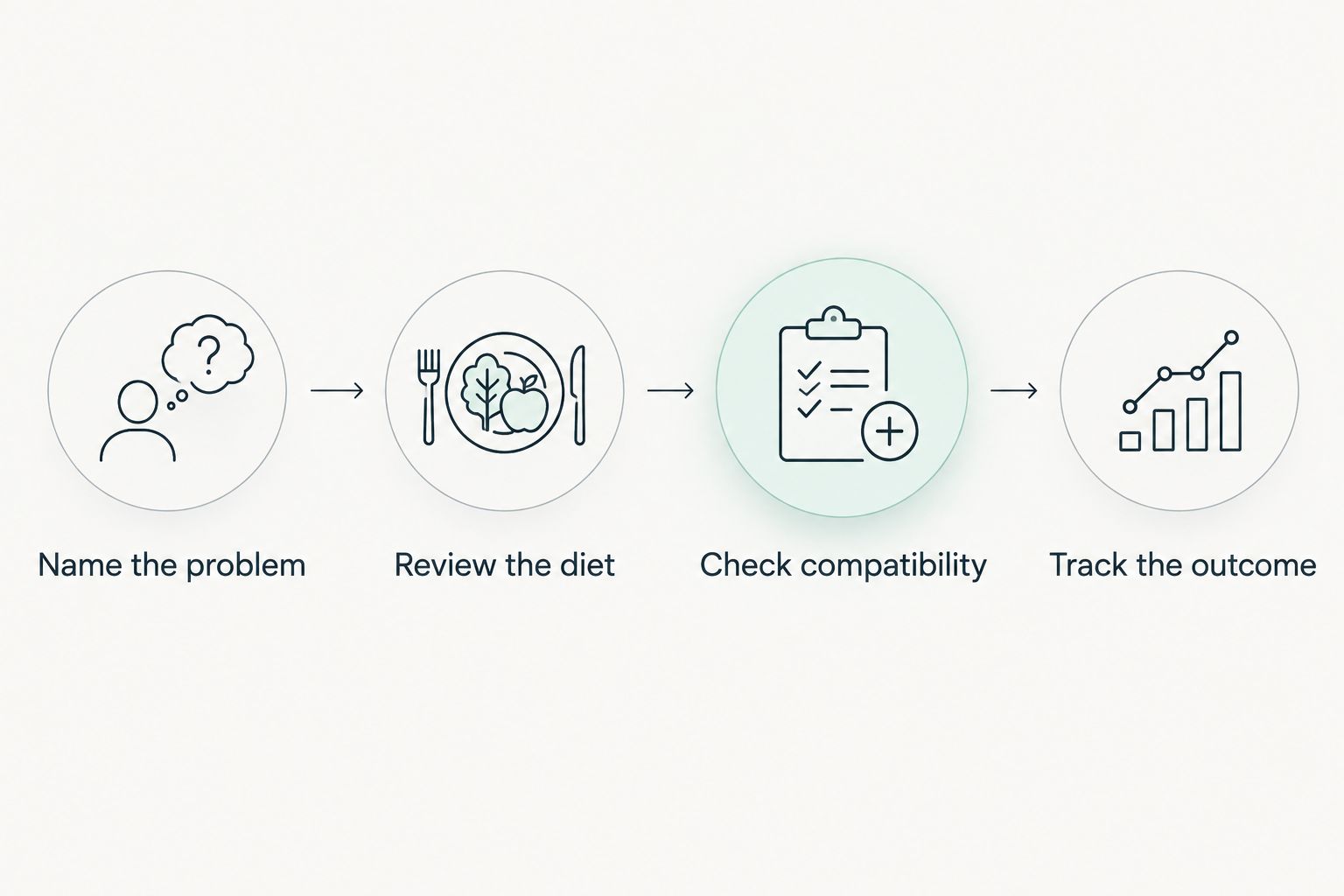
Use this sequence before adding a supplement. The aim is to identify one decision you can defend, not assemble every option in the comparison table.
- Name the problem: Describe the symptom and how it affects daily life. Separate interrupted sleep from daytime fatigue or difficulty retrieving words.
- Review the diet: Identify foods, fortified products, and supplements you already use. Count overlapping nutrients before adding more.
- Check compatibility: Bring the proposed ingredient label and your medication list to a clinician or pharmacist.
- Track the outcome: Record the symptom you want to change and agree on when to review progress.
A symptom diary helps organize the conversation. It does not diagnose a deficiency or prove that a supplement caused a change.
Avoid changing several nonessential supplements at once. If symptoms improve after multiple simultaneous changes, you cannot easily tell which change mattered. Follow clinician-directed treatment rather than delaying necessary care to preserve a tracking experiment.
How these options are ranked
This 2026 guide ranks options by use-case fit, established nutrient roles, label review, medication compatibility, and the ability to assess an outcome. The NIH Office of Dietary Supplements adult reference intakes support the vitamin D, calcium, and magnesium figures above; they are not perimenopause-specific treatment recommendations.
Position does not equal proven symptom relief. The cognitive-support system appears first because it directly matches that shopping category. The individual nutrients follow by distinct need. None earns a recommendation merely by appearing in a menopause-themed formula.
Which supplement should you choose?
For the undecided reader, the default is to assess your needs before buying—not start a menopause supplement stack. Choose vitamin D for an identified vitamin D need, calcium for a dietary calcium gap, iron for confirmed iron deficiency, and vitamin B12 when deficiency or intake risk supports it.
Consider magnesium for an appropriate intake gap. If your main concern is brain fog, disrupted sleep, or word retrieval, evaluate the cause and review any cognitive-support formula ingredient by ingredient.
Persistent or worsening symptoms deserve assessment. Sudden confusion, speech difficulty, or other abrupt neurological changes require urgent medical attention, not a trial of supplements.
FAQ
What's the best supplement for perimenopause?
The best supplement for perimenopause is one that addresses an identified nutrient need or a clearly defined goal. Vitamin D, calcium, iron, vitamin B12, and magnesium are not interchangeable, and none treats every perimenopause symptom.
What's the best supplement for perimenopause brain fog?
No supplement is a universal first choice for perimenopause brain fog. Assess sleep, medications, and other possible causes; correcting a diagnosed deficiency is different from taking a cognitive-support formula.
Should I take magnesium for perimenopause sleep problems?
Magnesium is not a default treatment for perimenopause sleep problems. Review your intake and health history, and seek assessment for persistent insomnia rather than assuming a magnesium deficiency.
Do I need iron if my periods become heavier?
Heavier periods warrant assessment, not automatic iron supplementation. A clinician can investigate the bleeding and determine whether blood tests and iron treatment are appropriate.
Is a multivitamin better than an AM/PM supplement system?
Neither format is automatically better. Compare the actual ingredients and amounts with your needs, medications, and existing supplements; the dosing schedule does not establish effectiveness.
Can I take several perimenopause supplements together?
Combining supplements requires checking for overlapping ingredients and interactions. Review the complete list with a clinician or pharmacist, especially if you take medication or have kidney disease.
Can supplements replace medical treatment for perimenopause?
Supplements do not replace assessment or evidence-based treatment for bothersome perimenopause symptoms. Discuss treatment options with a clinician and use supplements only when their purpose and safety are clear.
One last thing
The most useful number on a supplement label is often the amount you are already taking elsewhere. A multivitamin, separate nutrient, and combination formula can overlap even when their front labels describe different goals.
Before your next purchase, put every label side by side and total the shared ingredients. Bring that list to your appointment. This simple check turns an appealing supplement routine into a decision based on actual exposure.