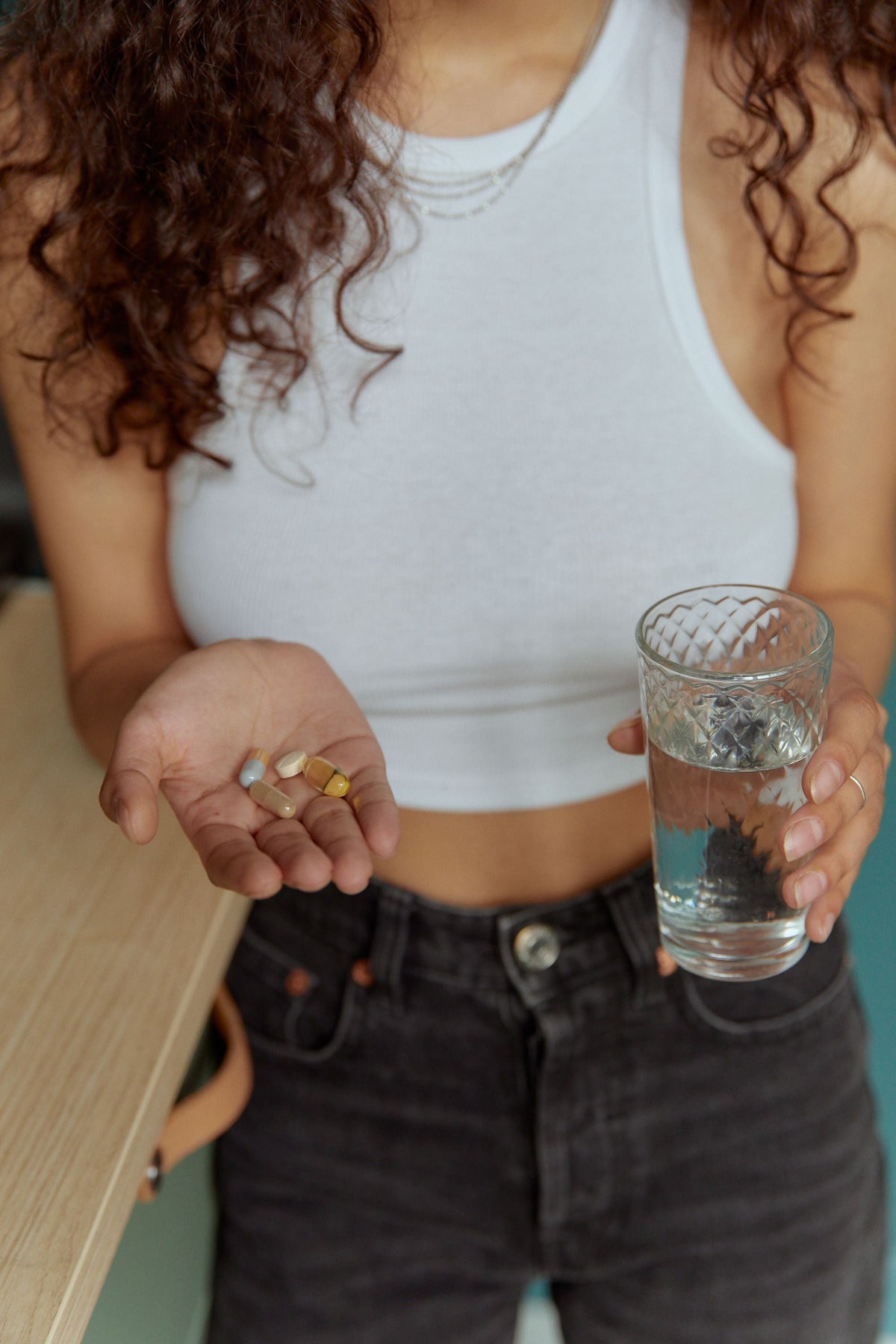
Some ingredients have real evidence for specific perimenopause symptoms. "Perimenopause supplements" as a category has none, because it is not a category — it is a shelf. The honest answer to "do they work" depends entirely on which ingredient, for which symptom, at what dose. Here is how to tell the difference.
Start with the thing that breaks most claims: placebo
Menopause symptom trials have an unusually large placebo response. In hot flash studies it is common for the placebo group to improve by 30 to 50 percent. That is not a quirk of the measurement — symptoms genuinely improve when someone is paying attention to them, tracking them, and expecting change.
This matters for two reasons. It means an uncontrolled study, or a page of testimonials, tells you almost nothing — the effect it is describing would have appeared anyway. And it means an honest trial has to beat that 30 to 50 percent, which is a high bar that most supplement ingredients do not clear by much.
It also means your own experience of a product working is not proof it works, and that is not an insult. It is why controlled trials exist.
What the regulation actually is
In the US, supplements are not approved by the FDA before they go on sale. Manufacturers are responsible for their own safety and labeling, and the FDA generally acts after a product is already on the market. There is no pre-market check that the bottle contains what the label says, at the amount it says.
Independent testing — USP, NSF, Informed Choice and similar — is the only routine check between the label and the contents. It is worth treating as a minimum rather than a bonus.
Where the evidence is reasonable
Graded honestly, by symptom rather than by product:
- Soy isoflavones, for hot flashes. Modest effect in meta-analyses, smaller than hormone therapy. Complicated by the fact that only some people carry the gut bacteria that convert daidzein to equol, which may be where the effect comes from — which would explain why trials disagree.
- Black cohosh, for hot flashes. Mixed. Some trials positive, some null, and the better-designed ones tend to be less impressive. Liver-injury case reports mean it is not a casual purchase.
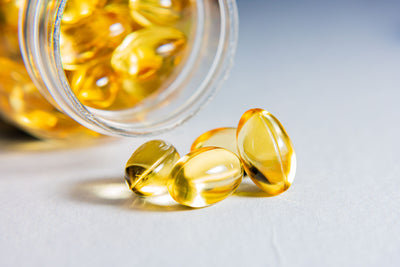
- Omega-3, EPA-predominant, for depressive symptoms. Real but modest, and inconsistent across trials.
- Glycine, for sleep onset. Small trials, but with a clear mechanism and a specific studied dose of 3 g before bed.
- Caffeine with L-theanine, for attention. Among the better-replicated combinations in cognitive research, though studied acutely rather than over months.
- Correcting an actual deficiency — iron, B12, vitamin D. This is the strongest evidence in the whole category, and it is the part nobody sells you, because it requires a blood test first and then costs very little.
Where it is thin or absent
Most products marketed for "hormone balance" have no trial evidence for that claim, because the claim has no measurable definition. Multi-ingredient perimenopause blends are rarely tested as blends — the marketing borrows the evidence for individual ingredients, then includes them at a fraction of the studied dose. And nothing in the supplement aisle has been shown to match hormone therapy for vasomotor symptoms, which is worth knowing before you spend six months on alternatives.
The four questions that separate the two
You can assess almost any product in this category by asking:
- Which symptom, specifically? A product claiming to help with everything from hot flashes to hair to mood to joints has not been tested for any of them.
- At what dose, and is it printed? The ingredient only does what it did in the study if it is present at the amount used in the study. A proprietary blend exists to stop you checking.
- Compared with what? If the evidence is testimonials or a single-arm study, the placebo response above has already accounted for it.
- Who tested the contents? Not the manufacturer.
What "the best perimenopause supplement" actually means
It is the wrong question, and it is the one every list on the internet answers. Perimenopause is not one symptom. The evidence for hot flashes, for sleep onset, for cognitive symptoms and for mood is four different bodies of literature with four different answers — and a product optimized for one is unlikely to be optimized for another.
The useful version of the question is: what is my worst symptom, and what has evidence for that? If it is hot flashes, hormone therapy is the most effective option and worth a conversation before anything else. If it is sleep, the sleep literature is where to look. If it is cognitive, so is that.
That is the case MYNDR is built on, and the reason it is two formulas rather than one: daytime focus and night-time recovery are separate problems with separate evidence. Every dose is printed on the label. We would rather you check them against the research than take our word for it — and if your main problem is hot flashes rather than fog, this is not the product for you, and we will say so.
The short version
- Ask about ingredients and symptoms, not about "perimenopause supplements" as a category.
- Placebo response in menopause trials runs 30 to 50 percent. Testimonials and single-arm studies tell you nothing.
- Supplements are not pre-approved by the FDA. Third-party testing is the only real check.
- The best-evidenced intervention in the category is correcting a deficiency you actually have.
- Nothing on the shelf matches hormone therapy for hot flashes.
- Undisclosed doses mean doses below what was studied.
This article is general information, not medical advice. Talk to a clinician about your own symptoms and history. These statements have not been evaluated by the Food and Drug Administration. This product is not intended to diagnose, treat, cure or prevent any disease.