Most herbs sold for perimenopause were not studied in perimenopause. They were studied for something adjacent — PMS, liver function, prostate size — and then marketed across. Here is what each one is actually for, what the trials say, and which ones carry interactions worth knowing before you start.
The ones with perimenopause evidence
- Black cohosh. The most-studied herb for menopausal symptoms, aimed at hot flashes. The results are genuinely mixed — some positive trials, some null, and the better-designed ones tend to be less impressive. Often described as a phytoestrogen; current understanding is that it is not estrogenic and works some other way. Case reports of liver injury mean it warrants a conversation rather than a casual purchase.
- Red clover. An isoflavone source, same family of compounds as soy. Weak and inconsistent for hot flashes. Worth the same caution as soy isoflavones if you have a hormone-sensitive cancer.
- Sage. A handful of small trials suggest it reduces hot flash frequency. Under-powered, but one of the more interesting minor entries.
- Maca. Small trials on mood and libido rather than hot flashes. Modest, and the products vary enormously in what they actually contain.
The ones studied for something else
This is where most of the money goes, and where the marketing does the most work.
- Vitex (chasteberry, agnus castus). The evidence is for PMS and cyclical breast pain — not menopause. It acts on prolactin, which is why it can affect cycles, and why it should not be combined casually with dopaminergic medication or hormonal treatment. A reasonable thing to discuss if PMS-type symptoms are your problem; not a perimenopause remedy.
- Evening primrose oil and starflower (borage) oil. Both are sources of GLA. The evidence for hot flashes is weak. There is some support for cyclical breast pain, which is a different complaint that happens to be common at the same age.
- Dong quai. Long history in traditional use, no good evidence on its own against placebo for menopausal symptoms. Interacts with anticoagulants and can cause photosensitivity.
- Saw palmetto. Studied for prostate enlargement in men. It is sold to women for hair thinning on the theory that it affects DHT, and the evidence for that use in perimenopausal women is essentially absent.
- Milk thistle. A liver herb with no perimenopause evidence at all. It appears in "detox" and "hormone balance" blends because the word liver sounds relevant to hormones, not because a trial supports it.
- Berberine. Real evidence, for blood glucose and lipids. It is not a menopause remedy, it interacts with a long list of medicines through CYP3A4, and it should not be used in pregnancy. Its recent popularity is a weight-loss story rather than a menopause one.
- Flaxseed. Lignans are phytoestrogens, and the hot flash evidence is weak. Ground flaxseed is still good food — fiber and omega-3 — which is a better reason to eat it than the hormonal one.
The one with real evidence and real risk
St John's Wort has reasonable support for mild to moderate depression and some for menopausal symptoms. It is also the most interaction-prone thing sold over the counter: it can reduce the effectiveness of hormonal contraception, interact dangerously with SSRIs and other serotonergic drugs, and interfere with anticoagulants, some epilepsy medicines and tamoxifen.
Do not take it alongside an antidepressant, and do not take it while relying on the pill, without talking to a pharmacist or doctor first. We covered the mood picture in more detail in supplements for mood.
Three things to check on any herbal product
- Is the dose printed? If the amounts are hidden inside a "proprietary blend", they are below anything used in research. That is what the blend is for.
- Is it standardized? Plants vary. A standardized extract states how much of the active constituent is present; an unstandardized one is a bag of ground leaf with an unknown strength.
- Who checked the contents? Supplements are not pre-approved by the FDA for safety or effectiveness before sale. Independent testing is the only routine check between the label and the bottle.
Take the bottles to a pharmacist
Herbal does not mean inert. Several entries above interact with prescription medication, and the interactions are not obscure — contraception, antidepressants, anticoagulants and tamoxifen are all common. A pharmacist will check the whole list in a few minutes, the consultation is usually free, and it is exactly what they are there for.
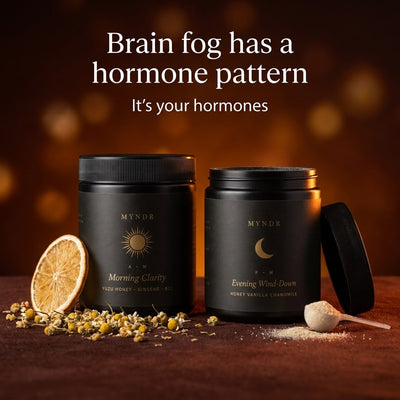
For completeness: MYNDR contains none of the herbs above — no black cohosh, no vitex, no red clover, no phytoestrogens of any kind. Its botanicals are the calming ones: lemon balm, chamomile, ashwagandha and Panax ginseng, alongside amino acids, magnesium and B vitamins. It is aimed at the cognitive and sleep side rather than at hot flashes. If a phytoestrogen route is what you are after, this is not it.
The short version
- Black cohosh, red clover, sage and maca have perimenopause evidence — modest and mixed.
- Vitex is for PMS, evening primrose for cyclical breast pain, saw palmetto for prostates, milk thistle for liver, berberine for blood glucose. None were studied for perimenopause.
- Black cohosh has liver-injury case reports; dong quai interacts with anticoagulants.
- St John's Wort works and interacts with contraception, SSRIs and tamoxifen.
- Look for printed doses and standardized extracts. A proprietary blend is hiding the amounts.
- Take the actual bottles to a pharmacist before adding anything to prescribed medication.
This article is general information, not medical advice. Talk to a clinician or pharmacist about your own symptoms, history and any supplement taken alongside prescribed medication. These statements have not been evaluated by the Food and Drug Administration. This product is not intended to diagnose, treat, cure or prevent any disease.