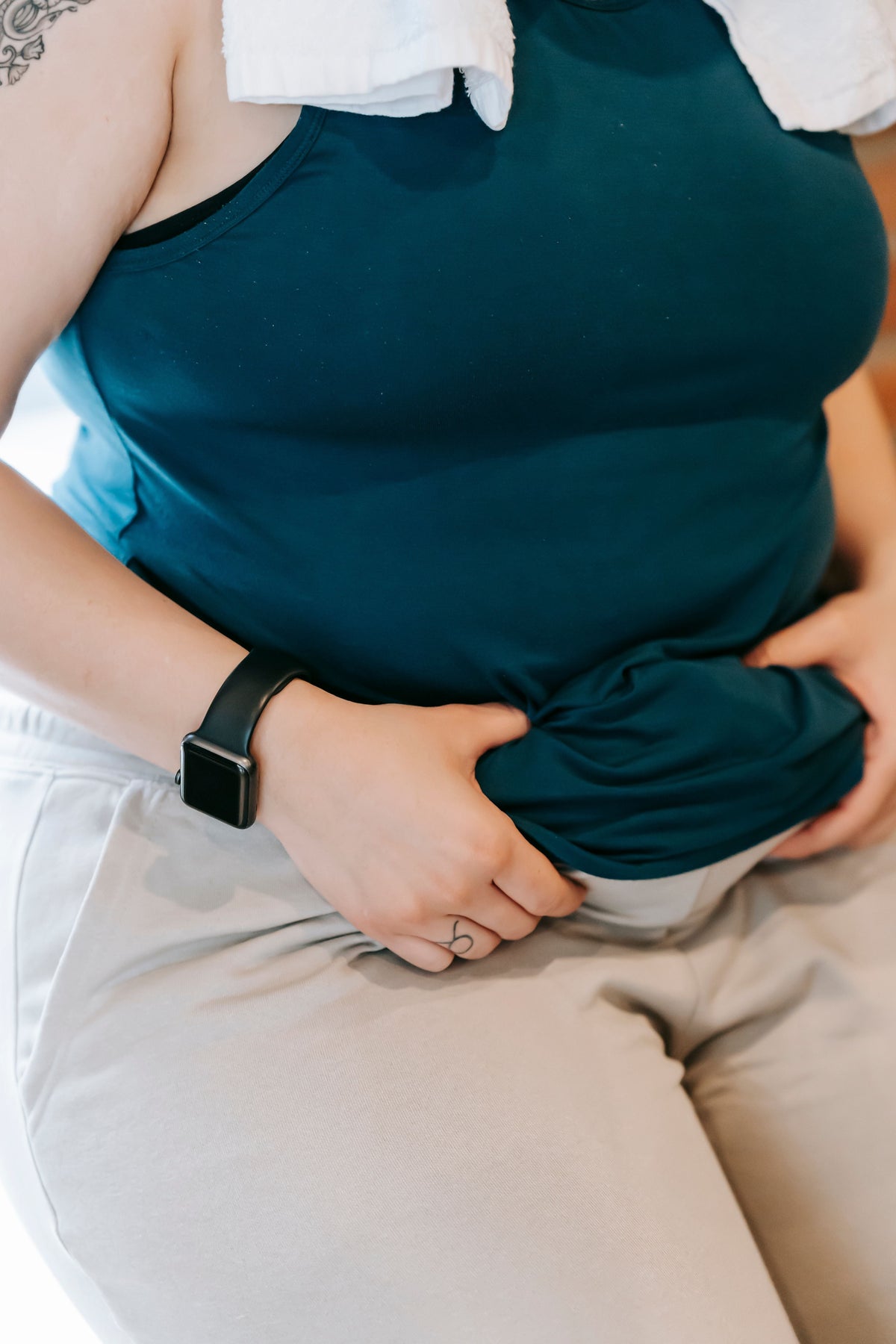
"The scale barely moved and nothing fits" is the single most common description of perimenopausal weight change, and it is not a contradiction. It is the whole event in one sentence. Fat moved rather than accumulated, and moved fat is harder to see on a scale than to feel in a waistband. Here is why it happened and what actually shifts it.
Why it went to your middle
Through your reproductive years, fat is preferentially stored on the hips and thighs — that pattern is estrogen-driven. As estrogen falls, the preference weakens, and storage shifts toward the abdomen.
Crucially, some of that is visceral fat — packed around the organs rather than sitting under the skin. That distinction matters more than appearance: visceral fat is metabolically active, and it is the part associated with cardiovascular and metabolic risk. It is also, usefully, the part that responds fastest to the right training.
Why it can feel sudden
"Sudden" weight gain is one of the most-searched phrases in perimenopause, and there are usually three things behind it:
- Redistribution crosses a visible threshold. The change was gradual; the moment clothes stop fitting is abrupt.
- Bloating is layered on top. Fluctuating hormones change fluid retention and gut motility. Several pounds of a waistband can be bloating rather than fat, and it varies week to week. The two feel identical and respond to completely different things.
- Sleep debt accumulated first. Broken sleep shifts appetite regulation and raises next-day intake, particularly of fast carbohydrate. The intake change is real but does not feel like a decision, which is why it registers as inexplicable.
Genuinely rapid gain — several pounds in two weeks, or gain with fatigue, cold intolerance and hair changes — is worth a thyroid test rather than a diet.
What shifts visceral fat
The good news buried in this topic: visceral fat is more responsive than subcutaneous fat, and the interventions are not exotic.
- Resistance training, twice a week minimum. Highest leverage available. It addresses the falling lean mass that is quietly lowering your metabolic rate, and it does more for the abdominal pattern than steady-state cardio. If you do one thing, do this.
- Protein at every meal, deliberately at breakfast. Older muscle needs a larger protein dose per meal to respond. Most women here are well under, and backloading it all to dinner wastes most of the effect.
- Treat sleep as part of the plan. Chasing a deficit on five broken hours is working against your own appetite hormones.
- Look honestly at alcohol. Calories, fragmented second-half-of-night sleep, and midlife creep. Often the largest single modifiable input.
- Walk more than feels necessary. Incidental movement falls quietly with age and desk work, and it is a larger share of daily expenditure than most people assume.
What does not shift it
- Eating less and less. The most common response and the most counterproductive — it accelerates muscle loss, which lowers the rate you were trying to raise.
- Targeted abdominal exercise. Crunches build muscle under the fat. They do not remove fat from above it; spot reduction is not a thing.
- Cardio alone. Useful, but it does not defend lean mass, which is the mechanism doing the damage.
- Detoxes, cleanses, waist trainers and "belly fat burner" capsules. Nothing here touches visceral fat. Some detox teas contain undeclared laxatives, which moves the scale by dehydrating you.
- "Cortisol belly" supplements. Chronic stress does influence fat distribution, but the products sold against that story have no meaningful trial evidence. We looked at the supplement category properly in perimenopause weight loss supplements.
Measure something other than the scale
If the event is redistribution, weight is the wrong instrument — it is the one number designed not to detect this. Better:
- Waist circumference, measured at the navel, same time of day, every two weeks. This is the one that tracks the thing you care about.
- What you can lift. Strength going up while the scale holds steady is muscle replacing fat, which is the outcome you want and the one the scale hides.
- How clothes fit at a fixed point — one specific waistband, not a general impression.
Expect the scale to be flat or even up slightly in the first weeks of resistance training. That is muscle and the water inside it. It is the intervention working, not failing.
Bloating or fat?
Worth separating, because they get treated as one thing. Bloating fluctuates within a day, is often worse in the evening, tends to track your cycle, and comes with gas or fullness. Fat does not change hour to hour. If your waistband varies by inches across a week, a meaningful part of that is fluid and gut, not tissue — and cutting calories will not touch it.
When to get checked
- Rapid unexplained gain with fatigue or cold intolerance — thyroid.
- New snoring or daytime sleepiness — sleep apnea, underdiagnosed in women, and it worsens everything above.
- Persistent bloating that does not fluctuate, or with pain or bowel changes — that needs investigating properly, not managing.
- Any unexplained weight loss — a more urgent conversation.
The short version
- The gain is mostly aging; the move to your middle is mostly estrogen. Different problems.
- Some of it is visceral fat, which matters for health and responds faster than you would expect.
- "Sudden" is usually redistribution crossing a visible line, plus bloating, plus accumulated sleep debt.
- Resistance training, protein and sleep are the three levers. In that order.
- Spot reduction, cardio alone and belly-fat capsules do not work.
- Track waist and strength, not weight. Expect the scale to rise slightly at first.
This article is general information, not medical advice. Talk to a clinician about your own symptoms and history. These statements have not been evaluated by the Food and Drug Administration. This product is not intended to diagnose, treat, cure or prevent any disease.