Before anything else: perimenopausal depression is real, common, and treatable — and it is not a supplement problem. If your mood has been low for most of the day, most days, for two weeks or more, or you have lost interest in things you cared about, that is a conversation with a clinician rather than a shopping decision. Everything below assumes you have ruled that out.
With that said, the mood changes many women experience in perimenopause are real but sit below that threshold — irritability with a shorter fuse than you recognize, anxiety with no object, a flatness that lifts. Here is an honest read of what the evidence supports for that.
Why mood changes at all
Estrogen modulates serotonin, dopamine and noradrenaline. It is not that estrogen falls and mood follows in a straight line — it is that estrogen becomes unstable, and the neurotransmitter systems it regulates become unstable with it. This is why the experience is so often described as volatility rather than sadness, and why it can feel unrelated to circumstances.
The second mechanism is simpler and larger than most people credit: broken sleep. Almost nothing degrades emotional regulation as reliably as a run of short nights, and perimenopause breaks sleep structurally. A meaningful share of what gets labeled a mood problem in this stage is a sleep problem wearing a mood problem's clothes.
What has reasonable evidence
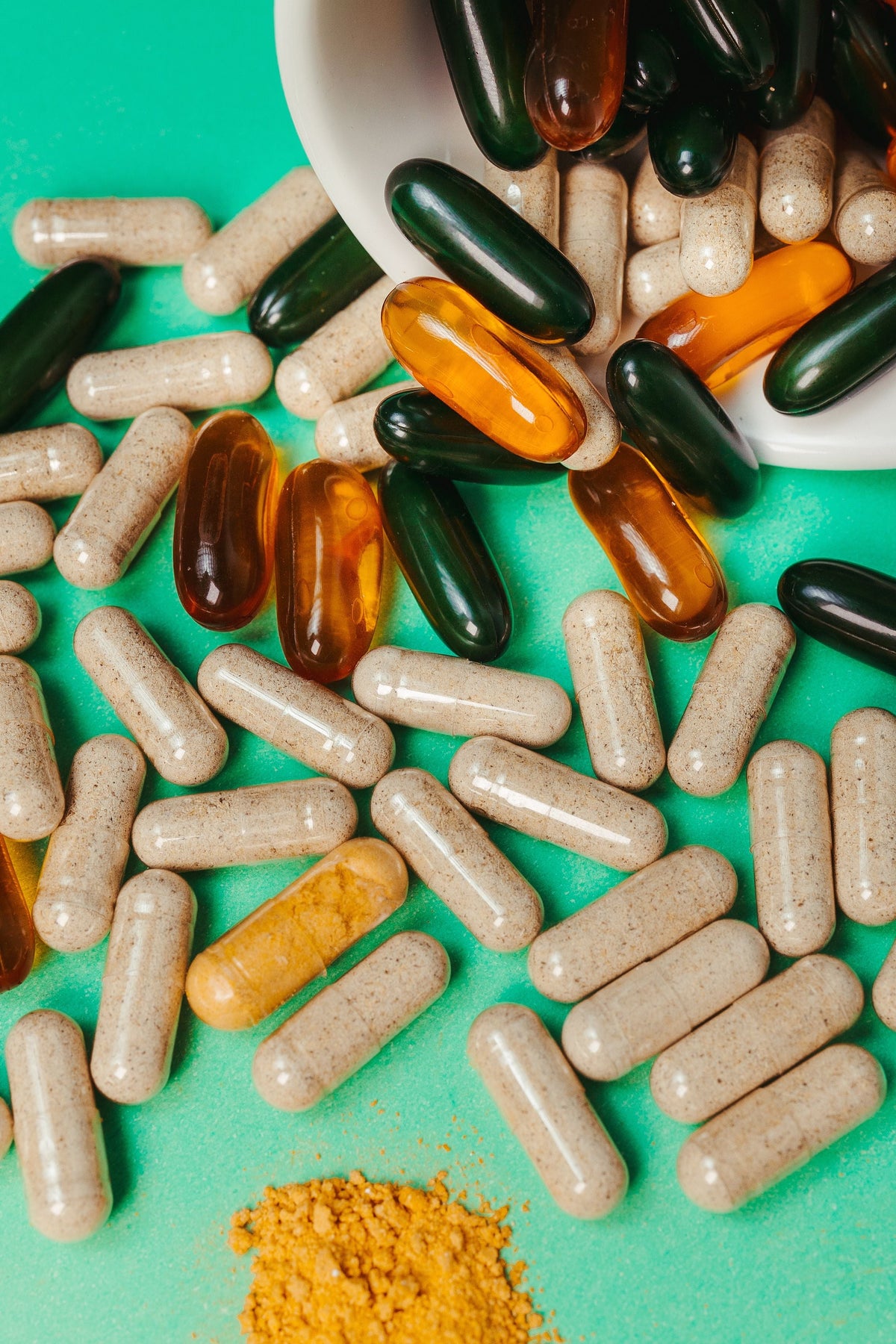
- Omega-3, EPA-predominant. The best-supported of the group for depressive symptoms, though the effect is modest and the trials are inconsistent. What evidence there is favors formulas where EPA outweighs DHA. Reasonable to try; not a treatment.
- Magnesium. Trials on anxiety and low mood are small and of mixed quality, but the signal is not nothing, the safety profile is good, and many women are genuinely low. Glycinate and citrate are better tolerated than oxide, which is mostly a laxative.
- Vitamin D — if you are deficient. Correcting a real deficiency can lift fatigue and mood. Supplementing when you are already replete does not appear to do anything for mood. This is a test-then-treat item, not a default.
- B6, B12 and folate — again, if you are low. They are cofactors in the synthesis of serotonin and dopamine, so a genuine deficiency has a plausible mechanism and a clear fix. Taking large doses when you are not deficient does not improve on that, and sustained high-dose B6 can cause nerve damage.
- Saffron. A handful of small randomized trials show an effect on mild to moderate depressive symptoms. Genuinely interesting, genuinely under-powered. Worth knowing about, not worth certainty.
What has evidence and also real risks
These are not fringe products. They have trial support — which is exactly why the interactions matter.
- St John's Wort. Reasonable evidence for mild to moderate depression, and some for menopausal symptoms. It is also one of the most interaction-prone substances sold over the counter: it can reduce the effectiveness of hormonal contraception, interact dangerously with SSRIs and other serotonergic drugs, and interfere with anticoagulants, some epilepsy medicines and tamoxifen. Do not take it alongside an antidepressant, and do not take it while relying on the pill for contraception, without talking to a pharmacist or doctor first.
- Ashwagandha. Several small trials on stress and anxiety. Caution if you have thyroid disease, since it can raise thyroid hormone levels, and there have been case reports of liver injury. Not for use in pregnancy.
- Black cohosh. Frequently sold for mood; the evidence that exists is for hot flashes, not mood, and is mixed even there. Liver-injury case reports mean it is worth a conversation before starting.
What is mostly marketing
Anything described as "balancing your hormones" is making a claim with no defined physiological meaning. Proprietary blends that list ingredients without doses are hiding the fact that the doses are below anything used in research — if a label will not tell you how much of something you are getting, assume the answer is not enough. And a long ingredient list is usually a worse sign than a short one, because the cost has been spread across twenty things rather than concentrated in the three that might do something.
The unglamorous levers that outperform the shelf
Exercise has better evidence for mood than any supplement in this article — aerobic or resistance, both. Alcohol reliably worsens both anxiety and sleep, and is the most commonly overlooked input. And addressing sleep directly tends to move mood more than anything aimed at mood directly, because of the mechanism described above.
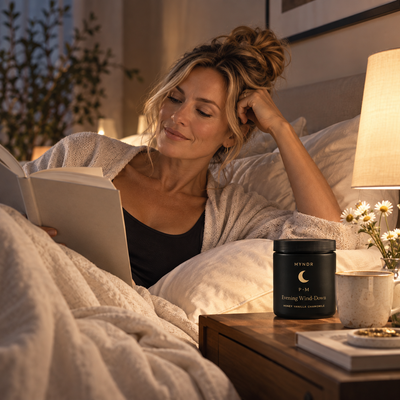
That is the part MYNDR was built for, and we should be precise about it: it is a cognitive support system for daytime focus and night-time recovery, not an antidepressant and not a mood product. The PM formula includes glycine and magnesium at doses that appear in sleep research, and the AM includes L-theanine and activated B6 and B12. If broken sleep is what is driving your irritability, supporting sleep is a reasonable thing to try. If it is not, this will not be the answer, and we would rather say so.
When to stop self-treating
Talk to a clinician rather than trying another supplement if:
- Low mood has persisted most days for two weeks or more.
- You have lost interest or pleasure in things that used to matter.
- Anxiety is interfering with work, sleep or relationships.
- You are having thoughts of harming yourself — this is urgent, and worth saying out loud to someone today.
Perimenopausal mood symptoms respond to treatment. Depending on your history, that may mean HRT, an antidepressant, talking therapy, or some combination — and finding out is a conversation, not a purchase.
The short version
- Persistent low mood is a clinical matter, not a supplement one. Start there.
- Mood volatility comes from estrogen instability plus broken sleep — and the sleep half is bigger than most people assume.
- EPA-predominant omega-3 and magnesium have the most reasonable support; vitamin D and B vitamins help if you are actually deficient.
- St John's Wort works and interacts badly with contraception, SSRIs and tamoxifen — check before starting.
- "Hormone balancing" is marketing. Undisclosed doses mean low doses.
- Exercise beats every supplement here for mood, and alcohol undoes more than most people realize.
This article is general information, not medical advice. Talk to a clinician about your own symptoms and history, and about any supplement you take alongside prescribed medication. These statements have not been evaluated by the Food and Drug Administration. This product is not intended to diagnose, treat, cure or prevent any disease.