
Best for an estrogen-like ingredient: soy isoflavones. Best for a confirmed nutrient gap: the specific nutrient you lack. There is no best overall choice among perimenopause estrogen supplements: supplements do not replace estrogen, and this 2026 guide separates hormone-related claims from bone, sleep, and cognitive support.
- Perimenopause estrogen supplements are not estrogen replacement; choose support around a specific symptom or confirmed nutritional need.
- Soy isoflavones have estrogen-like activity, but that does not establish reliable relief from perimenopause symptoms.
- Vitamin D, calcium, and vitamin B12 address nutritional needs, not fluctuating estrogen levels.
- Myndr is a cognitive-support option for perimenopausal women with brain fog, not an estrogen replacement.
Why this matters
Perimenopause involves changing hormone levels, not a steady, predictable estrogen decline. Brain fog, disrupted sleep, and hot flashes deserve attention, but a symptom alone does not tell you which supplement to take. Similar complaints also occur with other health conditions.
Choose the problem before choosing the bottle. An ingredient with estrogen-like activity, a nutrient needed for bone health, and a cognitive-support supplement serve different purposes. Treating them as interchangeable makes a useful comparison impossible.
Myndr focuses on AM/PM cognitive support for perimenopausal women aged 35–50 dealing with brain fog, disrupted sleep, and word retrieval issues. That positioning belongs in a symptom-focused comparison, not a claim that the system raises estrogen.
What makes the best perimenopause estrogen supplements?
Use these criteria to assess a supplement in 2026:
- Purpose: Identify whether the product targets nutritional adequacy, a specific symptom, or an estrogen-related claim.
- Evidence: Separate research on an ingredient from evidence for the finished product. They are not equivalent.
- Label clarity: Check the ingredients, amounts, directions, and warnings. An ingredient list without amounts limits assessment.
- Safety: Review medicines, existing supplements, medical history, and potential pregnancy before starting anything new.
- Need: Favor an identified dietary shortfall or deficiency over an unsupported promise to balance hormones.
- Trackability: Define the outcome you want to change. Better sleep and fewer word-finding problems are different outcomes.
A supplement earns a place when its purpose matches your need. A hormone-related slogan is not a selection criterion.
Perimenopause supplements at a glance
The order below distinguishes use cases; it is not a ranking of proven treatments for estrogen deficiency. No option receives an overall estrogen-replacement recommendation.
| Option | Best for | Standout feature | Key limitation |
|---|---|---|---|
| Soy isoflavones | Understanding phytoestrogen options | Plant compounds with estrogen-like activity | Not equivalent to estrogen therapy; symptom benefits are inconsistent |
| Vitamin D | Addressing inadequate vitamin D intake or deficiency | Supports calcium absorption and bone health | Does not replace estrogen |
| Calcium | Filling a dietary calcium shortfall | Supplies a mineral needed for bones | Unnecessary supplementation adds intake without addressing hormone symptoms |
| Vitamin B12 | Correcting low B12 status | Supports normal nerve function and red blood cell formation | Not a general brain-fog treatment when B12 status is adequate |
| Magnesium | Addressing inadequate magnesium intake | Essential mineral involved in normal nerve and muscle function | Sleep claims exceed what can be promised for perimenopause |
| Myndr AM/PM perimenopause cognitive support | A symptom-focused cognitive-support routine | AM/PM system with a free symptom tracker app | Cognitive-support positioning does not establish estrogen replacement or clinical benefit |
1. Soy isoflavones: best for understanding phytoestrogen options
Soy isoflavones are plant compounds that interact with estrogen receptors. This estrogen-like activity explains their presence in menopause supplements, but it does not make them interchangeable with prescribed estrogen. Studies of menopause symptom relief have produced inconsistent results.
Best for: Someone specifically considering phytoestrogens who wants to distinguish biological activity from demonstrated symptom relief.
Soy isoflavones pros:
- Have a clear connection to the phytoestrogen category.
- Are distinguishable from supplements that merely use hormone-balance language.
- Have been studied for menopause-related symptoms.
Soy isoflavones cons:
- Do not provide a reliable estrogen-replacement effect.
- Research on different preparations does not establish that every finished product works.
- Concentrated supplements require a safety discussion when you have a hormone-sensitive condition or take relevant medicines.
Soy foods and concentrated isoflavone supplements are different choices. Evidence about eating soy does not automatically establish the safety or effectiveness of a concentrated capsule.
For a 2026 buying decision, ask what outcome the actual product supports and what evidence applies to that preparation. Verdict: Hold—do not choose soy isoflavones solely to raise estrogen or assume they will resolve hot flashes.
2. Vitamin D: best for addressing inadequate intake or deficiency
Vitamin D helps your body absorb calcium and supports bone health. Its role matters during the menopause transition, but vitamin D is a nutrient, not estrogen support in the hormone-replacement sense.
The NIH Office of Dietary Supplements lists 600 IU, equivalent to 15 mcg, per day as the recommended intake for adults aged 19–70. This is a total-intake reference, not an instruction to add that amount regardless of your diet or existing supplements.
Best for: Someone with inadequate vitamin D intake or a deficiency that a clinician has identified.
Vitamin D pros:
- Has an established nutritional role.
- Supports calcium absorption.
- Can address a specific deficiency rather than an undefined hormone imbalance.
Vitamin D cons:
- Does not replace estrogen or establish relief from brain fog.
- Excess intake can cause harm.
- Deficiency treatment requires an individualized plan, not a generic shopping recommendation.
Review vitamin D already present in multivitamins and combination products. Adding another bottle without checking the total makes it harder to judge your intake.
Verdict: Buy when dietary assessment or clinical advice identifies a need; skip vitamin D marketed as an estrogen booster.
3. Calcium: best for filling a dietary shortfall
Calcium supplies material your body needs for bones and teeth. Estrogen changes affect bone health, but calcium does not correct those hormone changes. Its useful role is meeting a nutritional requirement.
The NIH Office of Dietary Supplements recommends 1,000 mg of calcium per day for adults aged 19–50. Count food, fortified drinks, and existing supplements before deciding whether you need an additional product.
Best for: Someone whose usual diet leaves a calcium gap.
Calcium pros:
- Addresses a measurable nutritional need.
- Supports bone health without requiring an estrogen-related claim.
- Allows a food-first approach before considering supplementation.
Calcium cons:
- Does not treat hot flashes, word retrieval problems, or estrogen fluctuations.
- Supplements can cause constipation or other digestive discomfort.
- Calcium can interfere with the absorption of certain medicines.
A bone-health concern also deserves a broader assessment. Calcium alone does not replace an evaluation of fracture risk, exercise, vitamin D status, or indicated medical treatment.
Verdict: Buy only to fill an identified intake gap; skip calcium as a hormone-balancing treatment.
4. Vitamin B12: best for correcting low B12 status
Vitamin B12 supports normal nerve function and red blood cell formation. Deficiency can cause neurological symptoms and fatigue, making it relevant when evaluating cognitive complaints. That does not mean every episode of perimenopause brain fog signals low B12.
The NIH Office of Dietary Supplements lists 2.4 mcg per day as the recommended intake for most adults. Deficiency treatment can require a different regimen, particularly when absorption is impaired.
Best for: Someone with confirmed low B12 or a dietary or medical reason to assess B12 status.
Vitamin B12 pros:
- Addresses a recognized cause of neurological symptoms when deficiency exists.
- Has a defined nutritional requirement.
- Provides a focused option when assessment identifies low status.
Vitamin B12 cons:
- Does not increase estrogen.
- Is not an established general treatment for menopause-related cognitive symptoms in people with adequate B12.
- Taking a supplement without assessing the cause of symptoms can delay a more useful evaluation.
Persistent word-finding difficulty deserves context: when it started, whether it is worsening, and how it affects daily tasks. Verdict: Buy for an identified B12 need; skip blanket claims that B12 fixes perimenopause brain fog.
5. Magnesium: best for addressing inadequate magnesium intake
Magnesium is an essential mineral involved in normal nerve and muscle function. It appears frequently in sleep supplements, but that popularity does not establish dependable treatment for sleep disruption during perimenopause.
Best for: Someone with an identified magnesium intake gap, rather than someone seeking estrogen replacement.
Magnesium pros:
- Has an established nutritional role.
- Can address inadequate intake.
- Offers a specific ingredient to assess instead of an undefined hormone-support blend.
Magnesium cons:
- Does not replace estrogen.
- Supplemental magnesium can cause diarrhea and abdominal discomfort.
- Kidney disease and medication interactions require particular attention.
Poor sleep is not one problem with one solution. Night sweats, insomnia, sleep apnea, and medication effects require different assessments; a magnesium supplement does not distinguish between them.
Verdict: Hold unless you have a nutritional reason to use it; skip magnesium as an automatic answer to perimenopause insomnia.
6. Myndr: best for a symptom-focused cognitive-support routine
Myndr sells an AM/PM cognitive support supplement system for perimenopausal women with brain fog, disrupted sleep, and word retrieval issues. The system includes a free symptom tracker app. Those are its stated focus and format, not evidence that it raises estrogen or treats a medical condition.
Best for: Perimenopausal women seeking a cognitive-support routine rather than estrogen replacement.
Myndr pros:
- Has a stated focus on cognitive complaints during perimenopause.
- Uses an AM/PM format.
- Includes a symptom tracker for recording your experience.
Myndr cons:
- Cognitive-support positioning does not establish a clinical treatment effect.
- The AM/PM format alone does not demonstrate better outcomes.
- Tracking symptoms cannot establish the cause of brain fog or sleep disruption.
Before using this cognitive-support system, review the current ingredient label and directions with a clinician or pharmacist. Check the whole formulation against your medicines and other supplements, not just the ingredient that sounds most relevant.
Verdict: Hold until the formulation passes your safety review; do not choose it to replace estrogen.
How the options rank
This 2026 ranking prioritizes a clear use case, established nutritional function, safety considerations, and the distinction between ingredient research and finished-product evidence. It does not claim head-to-head testing or equal evidence across the options.
The numerical intake references come from NIH Office of Dietary Supplements fact sheets for vitamin D, calcium, and vitamin B12. They describe adult nutritional requirements, not doses proven to treat perimenopause symptoms.
Which supplement should you choose?
The default choice is no estrogen supplement. Start by identifying whether your main concern is hot flashes, sleep disruption, cognitive symptoms, or a nutritional gap. Then match the next action to that concern.
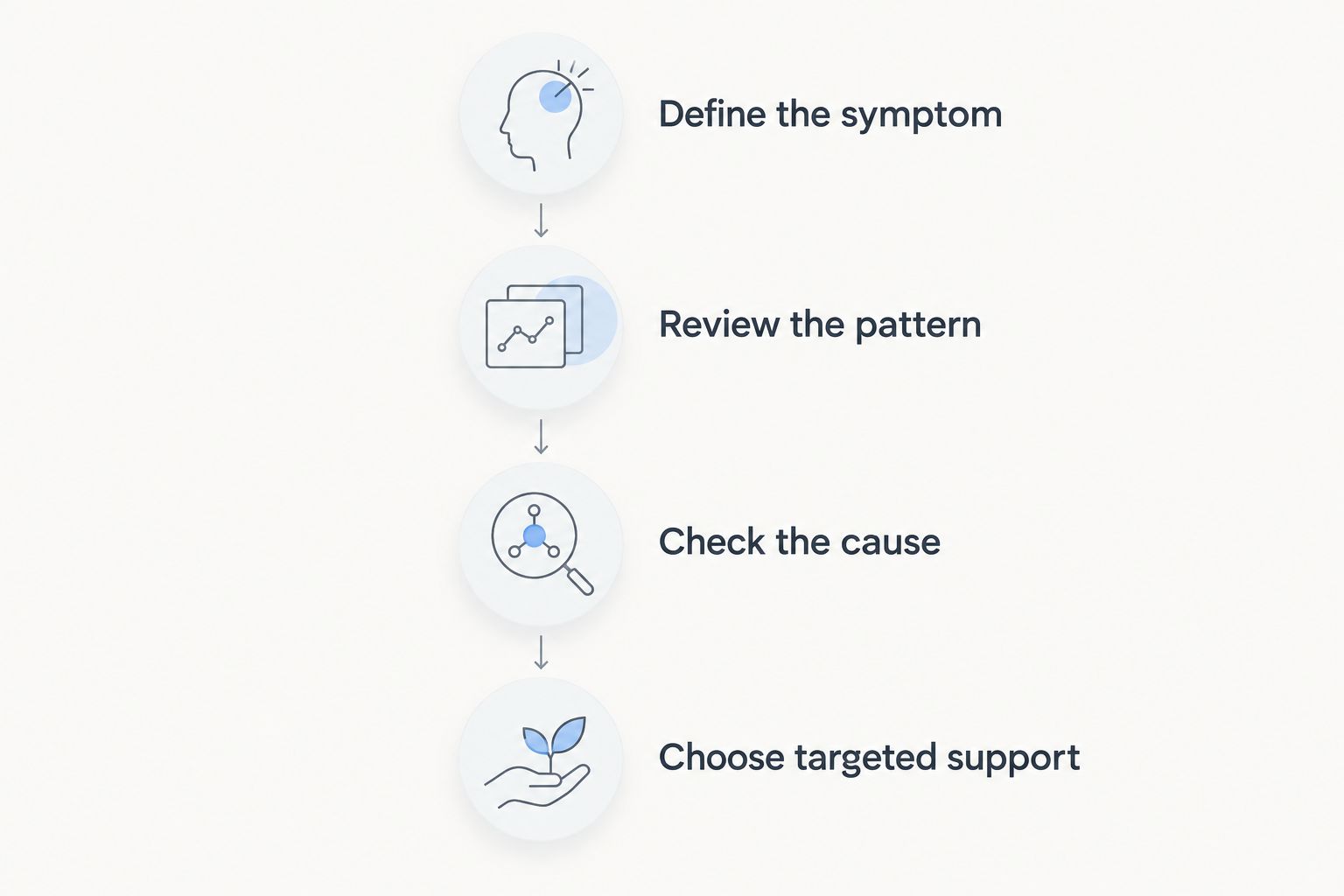
For your 2026 decision, use this sequence:
- Define the symptom: Describe what happens and how it affects your day.
- Review the pattern: Record sleep, menstrual changes, medicines, and symptoms together.
- Check the cause: Discuss persistent or disruptive symptoms with a clinician.
- Choose targeted support: Address an identified need instead of stacking hormone-related products.
Ask about evidence-based treatment when symptoms disrupt your functioning. Prescription hormone therapy is a separate medical decision; its benefits, risks, and suitability require an individual assessment. Seek urgent medical care for sudden speech difficulty, weakness, or confusion rather than treating these changes as routine brain fog.
FAQ
What's the best supplement to raise estrogen during perimenopause?
No supplement in this guide is recommended as a reliable way to raise estrogen during perimenopause. Soy isoflavones have estrogen-like activity, but they are not equivalent to estrogen replacement.
Are phytoestrogens the same as estrogen?
No, phytoestrogens are plant compounds with estrogen-like activity, not the same thing as estrogen medication. Their biological activity does not establish predictable symptom relief.
Can vitamin D balance perimenopause hormones?
Vitamin D supports calcium absorption and bone health; it is not an established treatment for balancing perimenopause hormones. Supplementation should address a nutritional need or a clinician-directed treatment plan.
Is Myndr an estrogen supplement?
Myndr is described as an AM/PM cognitive support supplement system for perimenopausal women, not an estrogen replacement. Its stated focus includes brain fog, disrupted sleep, and word retrieval issues.
Will vitamin B12 help perimenopause brain fog?
Vitamin B12 is relevant when deficiency contributes to neurological symptoms. It is not an established general treatment for perimenopause brain fog when B12 status is adequate.
Should I take magnesium for perimenopause sleep problems?
Do not assume magnesium will treat perimenopause sleep disruption. Assess the sleep problem and review nutritional needs, kidney health, and medication interactions before adding it.
Can I combine several perimenopause supplements?
Review the combined ingredients and amounts before taking several supplements together. A clinician or pharmacist can check duplicate nutrients and medication interactions.
When should I see a clinician about perimenopause symptoms?
See a clinician when symptoms persist, worsen, or interfere with sleep and daily functioning. Sudden speech difficulty, weakness, or confusion requires urgent medical assessment.
One last thing
A symptom tracker is most useful when you also record what changed. Starting several supplements together makes it difficult to connect an improvement or adverse effect to any particular product.
For 2026, make the goal specific before making the purchase. A better night's sleep, adequate calcium intake, and estrogen replacement are separate goals. Choose a plan that keeps them separate.