
Best overall: assess the cause before choosing a supplement. Best for a cognitive-support routine: Myndr AM/PM cognitive support; best for a confirmed nutrient deficiency: targeted replacement. This 2026 guide separates supplements that address a specific nutritional or sleep-related need from products presented as general mood fixes.
- Perimenopause mood swings supplements should address a specific need, not replace assessment of persistent mood symptoms.
- Myndr offers AM/PM cognitive support and symptom tracking for women experiencing brain fog and disrupted sleep.
- Vitamin B12 and vitamin D belong on the shortlist when a deficiency needs treatment.
- Magnesium, omega-3s, and melatonin serve different purposes; none is a universal perimenopause mood treatment.
Why this matters
Perimenopause can involve mood changes alongside disrupted sleep, hot flashes, and difficulty concentrating. Those symptoms overlap, but they are not interchangeable. A product intended for sleep or cognitive support is not automatically a treatment for irritability, anxiety, or depression.
The best supplement decision starts with the symptom you need to address. If your mood changes persist, affect relationships, or interfere with work, arrange a clinical assessment rather than cycling through supplements. Depression, anxiety, medication effects, thyroid problems, and nutritional deficiencies require different decisions.
For your 2026 shortlist, separate nutritional support from treatment. Menopause-focused care can include psychological treatment, prescription treatment, and discussion of hormone therapy when appropriate; a supplement ranking should not crowd out those options.
What makes the best perimenopause mood swings supplements?
Use these criteria before comparing products:
- Symptom fit: Does the option address low nutrient intake, a confirmed deficiency, sleep timing, or cognitive-support goals?
- Evidence fit: Evidence about a nutrient's normal role does not establish that taking extra improves perimenopause mood swings.
- Label clarity: You need ingredient amounts, serving instructions, and warnings—not just a proprietary blend name.
- Safety fit: Check medicines, health conditions, and overlapping ingredients before adding a supplement.
- Quality checks: Independent verification can help assess contents and manufacturing quality; it does not prove symptom relief.
- Trackable benefit: Choose a specific outcome, such as fewer nighttime awakenings or less disruptive irritability, before starting.
A supplement earns a place because its purpose matches your situation. It does not earn one because its label mentions hormones, calm, or menopause.
Supplements at a glance
This is a use-case ranking, not an efficacy ranking for mood swings. No option below is presented as a proven all-purpose treatment for perimenopause-related mood changes.
| Option | Best for | Standout purpose | Key limitation |
|---|---|---|---|
| Myndr AM/PM cognitive support | Cognitive-support routine with symptom tracking | AM/PM system aimed at brain fog and disrupted sleep | Cognitive support is not the same as mood treatment |
| Magnesium | Addressing inadequate magnesium intake | Supplies an essential mineral | Extra magnesium does not establish a mood benefit |
| Omega-3 supplements | Filling a dietary omega-3 gap | Provides omega-3 fatty acids | Not an established standalone perimenopause mood treatment |
| Vitamin D | Correcting confirmed vitamin D deficiency | Replaces an identified nutrient shortfall | More is not better when status is adequate |
| Vitamin B12 | Correcting B12 deficiency or addressing an intake risk | Supports normal nerve function and blood formation | Does not treat hormone-related mood swings by default |
| Melatonin | Clinician-reviewed sleep-timing concerns | Targets sleep timing rather than nutrition | Not a treatment for depression or general mood instability |
1. Myndr: best for a cognitive-support routine
Myndr sells an AM/PM cognitive support supplement system with a free symptom tracker app. It is aimed at perimenopausal women aged 35–50 experiencing brain fog, disrupted sleep, and word retrieval difficulties. That makes it a relevant option to examine when cognitive symptoms are part of your concern, rather than treating every difficult day as a mood problem.
Myndr cognitive support is best suited to women seeking an AM/PM routine and symptom tracking for perimenopause brain fog. That describes the intended use, not a demonstrated treatment effect on mood swings.
Myndr pros:
- Focuses on cognitive-support concerns during perimenopause.
- Uses an AM/PM system rather than a single undifferentiated routine.
- Includes an app for recording symptoms.
Myndr cons:
- Cognitive support does not replace assessment of persistent depression or anxiety.
- A multi-ingredient system requires a full label and medication review before use.
- Tracking a change does not establish that a supplement caused it.
Best for: Women whose priorities include brain fog, disrupted sleep, and a structured symptom record.
Verdict: Hold until the ingredient label and your medicines have been reviewed; consider for cognitive-support goals, not as a proven mood treatment.
2. Magnesium: best for inadequate dietary intake
Magnesium contributes to normal nerve and muscle function. Supplementation addresses intake needs, but that biological role alone does not demonstrate relief from perimenopause mood swings. Start by reviewing food intake and the reason you want a supplement.
The NIH Office of Dietary Supplements lists an adult upper limit of 350 mg per day from supplements and medications. That limit excludes magnesium naturally present in food and is not a suggested treatment dose.
Magnesium pros:
- Addresses a defined nutritional need when intake is inadequate.
- Can be assessed alongside dietary sources rather than used in isolation.
- Labels allow you to compare the amount of elemental magnesium.
Magnesium cons:
- Supplemental magnesium can cause diarrhea, nausea, and abdominal cramping.
- Kidney disease changes the safety assessment.
- Magnesium can interfere with the absorption of certain medicines.
Best for: Someone addressing inadequate magnesium intake after reviewing diet and safety.
Verdict: Consider for an intake gap; skip treating magnesium as a universal mood or sleep remedy.
3. Omega-3 supplements: best for a dietary omega-3 gap
Omega-3 supplements provide fatty acids such as EPA and DHA. They are a nutritional option when your diet does not supply the omega-3s you intend to consume, not an automatic response to irritability. Research on omega-3s and depression does not make every fish-oil product a treatment for perimenopause mood swings.
Compare the named fatty acids on the label, not just the total amount of fish oil. Those are different measurements. In 2026, the useful question remains whether the formulation serves a defined nutritional or clinician-directed goal.
Omega-3 pros:
- Provides a way to address a dietary omega-3 gap.
- EPA and DHA amounts can be checked on the label.
- Offers a distinct nutritional purpose rather than a general hormone-balancing claim.
Omega-3 cons:
- Can cause gastrointestinal discomfort or an unpleasant aftertaste.
- Requires review with anticoagulants and other medicines affecting bleeding.
- Is not an established standalone treatment for perimenopause-related mood symptoms.
Best for: Women with a dietary omega-3 gap and a clear reason to supplement.
Verdict: Consider for nutrition; hold if your only reason is a promise of mood stabilization.
4. Vitamin D: best for confirmed deficiency
Vitamin D supplementation has a clear role in treating deficiency. That does not mean taking more improves mood when your vitamin D status is already adequate. Ask whether testing is appropriate for your symptoms and risk factors rather than ordering a supplement solely because a menopause label recommends it.
The NIH Office of Dietary Supplements lists 4,000 IU per day as the adult upper intake limit. It is a safety ceiling, not a mood-treatment target; clinician-directed deficiency treatment requires its own instructions.
Vitamin D pros:
- Treats an identifiable nutritional deficiency.
- Supports normal calcium absorption and bone health.
- Can be managed using an individualized treatment plan.
Vitamin D cons:
- Excessive intake can cause toxicity, including elevated blood calcium.
- Multiple products can unintentionally duplicate vitamin D.
- Correcting deficiency does not establish vitamin D as a general perimenopause mood treatment.
Best for: Women with confirmed deficiency and a clinician-directed replacement plan.
Verdict: Use for an established need; skip escalating intake in pursuit of a mood effect.
5. Vitamin B12: best for deficiency or a clear intake risk
Vitamin B12 supports normal nerve function and red blood cell formation. Deficiency can cause fatigue and neurological symptoms, so it deserves attention when your history or symptoms suggest a risk. Low intake of animal-derived foods and certain absorption problems are reasons to discuss assessment.
The NIH Office of Dietary Supplements lists 2.4 mcg per day as the recommended dietary allowance for most adults. That nutritional requirement is not a deficiency-treatment dose, and it is not evidence that extra B12 improves mood in someone with adequate levels.
Vitamin B12 pros:
- Addresses a deficiency with recognized health consequences.
- Serves a specific nutritional purpose.
- Can be selected within a plan that considers the cause of deficiency.
Vitamin B12 cons:
- Does not address every cause of fatigue, brain fog, or irritability.
- Absorption problems can change the appropriate treatment route.
- Supplementing without assessment can distract from another explanation for symptoms.
Best for: Women with confirmed B12 deficiency or an intake or absorption risk requiring assessment.
Verdict: Use when indicated; skip B12 as a default hormone-related mood supplement.
6. Melatonin: best for reviewed sleep-timing concerns
Melatonin is a hormone involved in the sleep-wake cycle, not a nutrient replacement. Its relevant use case is sleep timing—not a broad promise to calm emotions. If poor sleep and irritability occur together, first distinguish difficulty falling asleep from repeated awakenings, night sweats, or another sleep problem.
The National Center for Complementary and Integrative Health describes uncertainty about long-term melatonin safety and cautions about interactions. Persistent insomnia deserves an assessment rather than indefinite self-treatment.
Melatonin pros:
- Has a specific sleep-timing purpose.
- Offers a separate option from nutritional supplements.
- Can be discussed within a sleep-focused care plan.
Melatonin cons:
- Can cause daytime drowsiness, headache, or dizziness.
- Does not treat depression or every cause of interrupted sleep.
- Long-term safety remains uncertain.
Best for: Someone with a sleep-timing concern reviewed by a clinician or pharmacist.
Verdict: Hold until the sleep problem is defined; skip using melatonin as a mood treatment.
How these options are ranked
The 2026 ranking prioritizes symptom fit, a defined purpose, label review, and safety. It does not claim head-to-head testing or comparable benefits across these options. Nutrient replacement, cognitive support, and sleep timing are different jobs.
The safety reference points are the NIH Office of Dietary Supplements fact sheets for magnesium, vitamin D, vitamin B12, and omega-3 fatty acids, plus the National Center for Complementary and Integrative Health information on melatonin. These sources describe nutrient requirements, risks, and evidence boundaries—not a winning supplement for perimenopause mood swings.
Which supplement should you choose?
If you are undecided, choose assessment before a supplement. Bring the symptom that disrupts your life most, your medication list, and the labels of anything you already take. Then match the next step to the problem rather than buying several overlapping products.
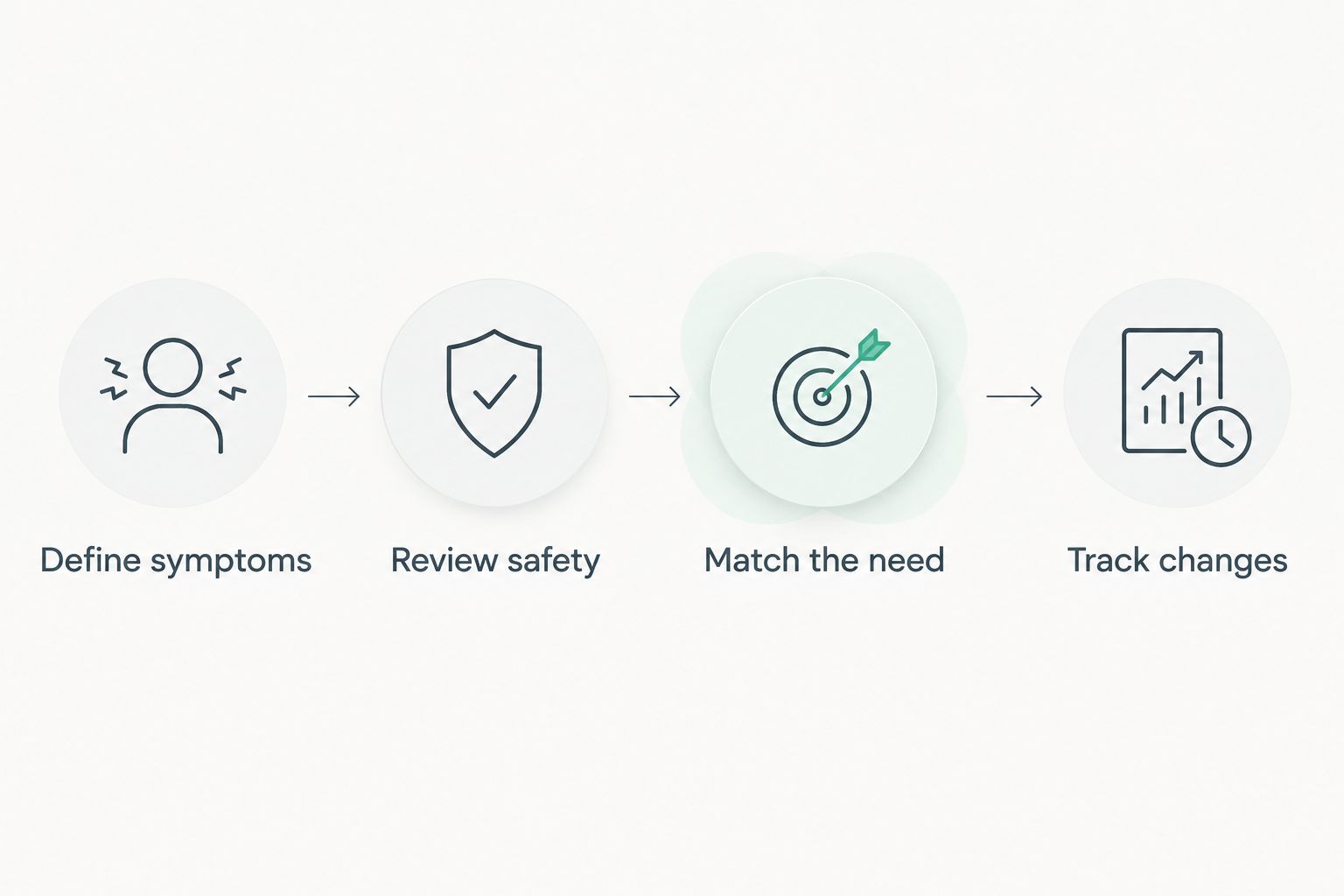
Use this sequence for a 2026 decision:
- Define symptoms: Separate irritability, low mood, anxiety, brain fog, and sleep disruption.
- Review safety: Check medicines, medical conditions, and duplicate ingredients.
- Match the need: Choose targeted replacement or support only when its purpose fits.
- Track changes: Record the same symptoms consistently, including unwanted effects.
This sequence keeps the decision tied to a specific need. A symptom record also gives your clinician more useful information than a general report that a product did or did not work.
FAQ
What's the best supplement for perimenopause mood swings?
No supplement is an established universal treatment for perimenopause mood swings. Choose based on a specific need, such as confirmed deficiency, and seek assessment when mood symptoms persist or disrupt daily life.
Is magnesium good for perimenopause mood swings?
Magnesium addresses magnesium intake needs, but that does not establish it as a treatment for perimenopause mood swings. Review diet, kidney health, medicines, and the elemental magnesium amount before supplementing.
Is Myndr intended for mood swings or brain fog?
Myndr is described as an AM/PM cognitive support system for perimenopausal women dealing with brain fog, disrupted sleep, and word retrieval issues. That intended use should not be read as proof of mood-treatment benefits.
Should I take vitamin D or B12 for mood changes?
Vitamin D or B12 belongs in the decision when deficiency or an intake risk needs assessment. Neither is a default treatment for hormone-related mood changes when nutritional status is adequate.
Can melatonin help if poor sleep makes me irritable?
Melatonin targets sleep timing, not irritability itself. A clinician can help distinguish a timing problem from insomnia, night sweats, medication effects, or another cause of disrupted sleep.
Can I combine several perimenopause supplements?
Have a pharmacist or clinician review the complete labels before combining supplements. Overlapping ingredients and medicine interactions matter even when each product is sold without a prescription.
When should mood swings get medical attention?
Seek assessment when mood changes persist, worsen, or interfere with work, relationships, or daily functioning. Thoughts of self-harm require immediate help; in the United States, call or text 988.
One last thing
Track what improved, not just whether you felt better overall. Better sleep, easier word retrieval, and less irritability are different outcomes. Keeping them separate prevents you from mistaking progress in one area for resolution of another—and makes your next care decision clearer.