
Best overall for a capsule-first shortlist: Pure Encapsulations Magnesium (glycinate). Best powder option: Thorne Magnesium Bisglycinate; best mixed-chelate option: Doctor’s Best High Absorption Magnesium. This 2026 guide compares magnesium glycinate for perimenopause by formulation, daily use, and safety—not by unproven promises about hormones or brain fog.
- Pure Encapsulations Magnesium (glycinate) is the capsule-first pick for magnesium glycinate for perimenopause, not a proven menopause treatment.
- Thorne Magnesium Bisglycinate suits readers who prefer mixing powder rather than swallowing capsules.
- Doctor’s Best High Absorption Magnesium uses glycinate and lysinate chelation; it is not a glycinate-only comparison.
- MYNDR offers AM/PM cognitive support and symptom tracking; that does not establish magnesium content or clinical superiority.
- Check elemental magnesium, medication interactions, and total supplemental intake before choosing a brand.
Why this matters
Perimenopause can bring disrupted sleep, difficulty concentrating, and word-retrieval problems. Those symptoms do not establish magnesium deficiency, and a magnesium supplement does not diagnose or treat their underlying cause.
Choose magnesium to address an identified nutritional need—not because a label promises to solve perimenopause. Persistent sleep problems or cognitive changes deserve a clinical discussion, particularly when they affect your work, driving, or daily functioning.
MYNDR’s AM/PM cognitive support system targets perimenopausal women dealing with brain fog, disrupted sleep, and word-retrieval issues. That broader positioning is separate from this magnesium comparison; an AM/PM system and a single-ingredient mineral supplement answer different buying questions.
What makes the best magnesium glycinate for perimenopause?
For a useful 2026 comparison, assess the label before the brand name. These criteria distinguish a suitable supplement from an appealing claim:
- Elemental magnesium: Compare the amount of magnesium supplied, not the weight of the entire magnesium compound.
- Exact formulation: Identify glycinate or bisglycinate, mixed chelates, and any other magnesium forms listed on the label.
- Usable format: Choose capsules, tablets, or powder according to what you can take consistently and measure correctly.
- Ingredient transparency: Review the full ingredient list, including flavorings, sweeteners, and other active ingredients.
- Evidence boundaries: Separate evidence about magnesium nutrition from claims about treating insomnia, brain fog, or perimenopause.
- Safety fit: Review kidney health, medications, and magnesium from other supplements before starting.
Magnesium glycinate and magnesium bisglycinate commonly describe magnesium bound to glycine. The naming alone does not establish clinical effectiveness, digestive tolerance, or whether another magnesium form appears in the formulation.
A longer ingredient list is not automatically better. If your goal is to assess magnesium specifically, added ingredients make it harder to identify what caused a benefit or an unwanted effect.
Magnesium brands at a glance
The following ranking prioritizes format and formulation clarity. It does not establish that any brand treats perimenopausal symptoms better than another.
| Ranked option | Best for | Standout distinction | Key limitation |
|---|---|---|---|
| Pure Encapsulations Magnesium (glycinate) | A capsule-first shortlist | Glycinate supplied in capsule format | Capsules do not offer the same measurement flexibility as powder |
| Thorne Magnesium Bisglycinate | Readers who prefer powder | Bisglycinate supplied as a mixable powder | Preparation and accurate measuring add a daily step |
| Doctor’s Best High Absorption Magnesium | Readers considering mixed amino-acid chelates | Magnesium chelated with glycine and lysine | Not a glycinate-only formulation |
Use the exact product name when checking a label. A manufacturer can sell several magnesium products, and brand-level comparisons can hide differences between formulations.
1. Pure Encapsulations: best magnesium glycinate for capsule users
Pure Encapsulations Magnesium (glycinate) provides magnesium glycinate in capsules. It belongs on your shortlist when you want a capsule-based product rather than a drink you prepare.
Best for: readers who prefer capsules and want to evaluate a glycinate formulation directly. The capsule format is the reason for this default recommendation—not evidence that the brand improves perimenopausal sleep or cognition more than competing products.
Pure Encapsulations pros
- The product name identifies the magnesium form being considered.
- Capsules avoid mixing a drink as part of your routine.
- A capsule format removes the need to measure loose powder.
Pure Encapsulations cons
- Capsule swallowing is a poor fit if you already struggle with pills.
- Adjusting intake requires working within the labeled capsule serving rather than measuring powder.
- The formulation does not establish a perimenopause-specific treatment benefit.
Before choosing Pure Encapsulations Magnesium (glycinate), inspect the current Supplement Facts panel. Confirm elemental magnesium per serving, the number of capsules in that serving, and every other ingredient.
Do not assume that the amount displayed prominently on the packaging represents one capsule. The serving-size line is the controlling detail.
Verdict: Buy only after confirming the label and your safety fit; this is the default capsule shortlist, not a default treatment for perimenopause.
2. Thorne: best magnesium bisglycinate for powder users
Thorne Magnesium Bisglycinate supplies the mineral in powder form. It suits readers who prefer mixing a supplement instead of swallowing capsules.
Best for: readers who want a powder-based magnesium routine. Choose this format because it fits how you take supplements, not because powder has been established as a better treatment for perimenopausal symptoms.
Thorne pros
- Powder provides an alternative to swallowing capsules or tablets.
- The product name identifies bisglycinate rather than leaving the form unspecified.
- Mixing creates a clear, repeatable step in an existing daily routine.
Thorne cons
- Powder requires preparation and accurate measurement.
- Taste and mixing preferences can make a powder routine less practical.
- A scoop is not a reason to estimate intake without reading the serving instructions.
For Thorne Magnesium Bisglycinate, check the current label for elemental magnesium per serving and any flavorings or sweeteners. Do not transfer serving instructions from another powder, even when both products use bisglycinate.
A powder is useful only if you measure it consistently. If preparation means you regularly skip it or estimate the serving, capsules are the more practical format for your routine.
Verdict: Buy for a powder preference after checking the label; skip if preparation or measurement creates a daily obstacle.
3. Doctor’s Best: best magnesium option for mixed-chelate shoppers
Doctor’s Best High Absorption Magnesium uses magnesium chelated with glycine and lysine. It is relevant to this comparison because glycinate is part of the formulation, but it should not be described as a glycinate-only product.
Best for: readers intentionally comparing mixed amino-acid chelates with glycinate formulations. The words High Absorption are part of the product name, not proof of superiority over the other options here.
Doctor’s Best pros
- The formulation gives you a distinct mixed-chelate option to assess.
- Its glycine-and-lysine distinction helps clarify what you are actually comparing.
- It broadens the shortlist beyond products named only for glycinate or bisglycinate.
Doctor’s Best cons
- It does not fit a strict glycinate-only selection rule.
- The product name alone does not quantify comparative absorption.
- A different chelate composition does not establish better sleep or cognitive outcomes.
Read the full Supplement Facts panel and ingredient list for the exact Doctor’s Best product you are considering. Do not substitute another product from the same manufacturer and assume the formulation stays the same.
If a clinician specifically recommends a particular magnesium form, follow that recommendation rather than choosing by a broad absorption claim.
Verdict: Hold if your goal is glycinate-only; consider buying only when you intentionally want the mixed-chelate formulation.
What magnesium can—and cannot—tell you about symptoms
Magnesium is an essential nutrient involved in normal nerve and muscle function. Correcting inadequate intake is a nutritional goal; treating perimenopausal insomnia or brain fog is a different clinical question.
Evidence does not establish magnesium glycinate as a stand-alone treatment for perimenopausal brain fog, word-retrieval problems, or insomnia. A biochemical role in the body is not enough to prove that a supplement improves a particular symptom.
For your 2026 decision, keep three questions separate:
- Nutritional need: Is your usual intake adequate, and is supplementation appropriate?
- Symptom cause: What is contributing to your sleep or cognitive difficulty?
- Product fit: Does this formulation suit your health, medications, and routine?
These questions prevent a common mistake: interpreting every bad night as a need for more magnesium. Sleep disruption can have several contributors, and identifying those contributors matters more than switching repeatedly between supplement brands.
Sudden confusion or new difficulty speaking is not a supplement-selection problem. Seek emergency medical care for sudden symptoms rather than attributing them to perimenopause.
Read the dose before choosing the brand
The NIH Office of Dietary Supplements lists a recommended dietary allowance of 320 mg per day for adult women aged 31 and older who are not pregnant or breastfeeding. That figure includes magnesium from food and supplements; it is not an instruction to take that amount as a supplement.
For women aged 19–30 who are not pregnant or breastfeeding, the allowance is 310 mg per day. Age and life stage matter, so avoid using a generic daily target without checking which guidance applies to you.
The adult upper limit for magnesium from supplements and medications is 350 mg per day, unless a healthcare professional directs otherwise. Magnesium naturally present in food does not count toward that supplemental limit.
These NIH reference values provide a safety framework for a 2026 purchase. They are not a personalized prescription and do not establish an effective perimenopause dose.
Check your total intake
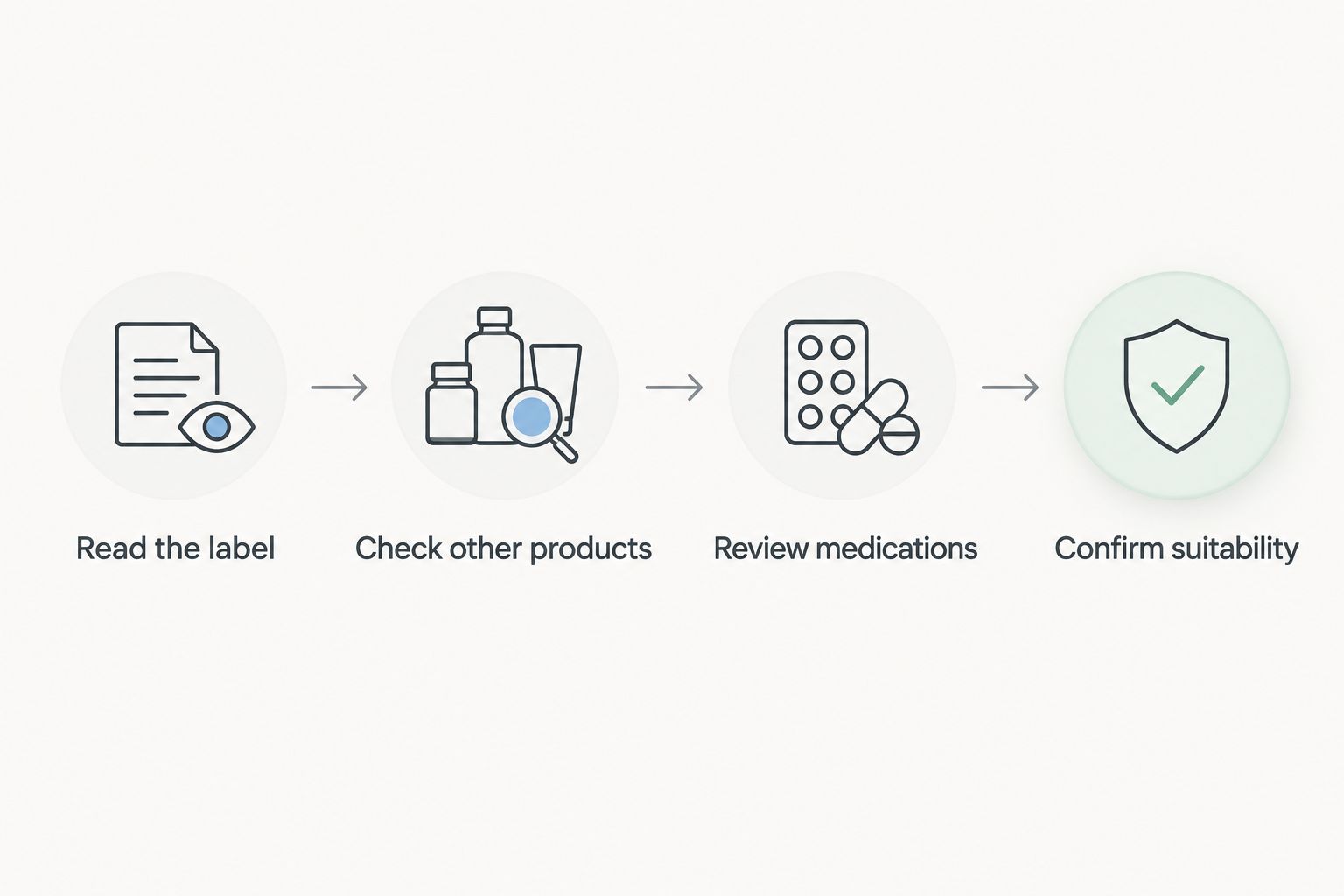
Use this sequence before adding magnesium:
- Read the label: Find elemental magnesium and the stated serving size.
- Check other products: Include magnesium-containing multivitamins, sleep blends, antacids, and laxatives.
- Review medications: Ask a pharmacist about interactions and any required spacing.
- Confirm suitability: Discuss supplementation if you have kidney disease or another relevant health condition.
Magnesium supplements can cause diarrhea, nausea, and abdominal cramping. Glycinate is not a guarantee against those effects, and kidney impairment increases the risk of magnesium accumulating in the body.
Magnesium also interacts with some medicines, including certain antibiotics and osteoporosis medicines. Ask for instructions specific to your prescription rather than applying a universal spacing rule.
Where MYNDR fits in this decision
MYNDR’s cognitive support offering is an AM/PM supplement system with a free symptom tracker app for perimenopausal women aged 35–50. That makes it a broader routine to consider, not a verified substitute for any magnesium product in this ranking.
MYNDR is designed for perimenopausal women seeking AM/PM cognitive support and symptom tracking. That describes its intended audience; it does not establish symptom relief or superiority over magnesium.
The distinction matters when you compare products. A single-mineral supplement answers a formulation question, while a multi-part routine requires you to review the complete ingredient lists and overlapping intake.
Use symptom tracking to record what changes and when. A diary helps organize a clinical conversation, but improvement recorded after starting a product does not, by itself, prove that the product caused it.
How the ranking works
This 2026 shortlist uses the criteria above: identifiable formulation, practical format, label readability, and clear limits on what the recommendation means. Pure Encapsulations is the capsule-first default, Thorne occupies the powder slot, and Doctor’s Best occupies the mixed-chelate slot.
The ranking does not use invented testing results, assumed clinical outcomes, or product-name claims as evidence. It also does not rank these brands by their ability to treat perimenopause, because that conclusion is not established here.
Which magnesium option should you choose?
Choose the format you can use correctly after confirming that supplementation is appropriate. Start with Pure Encapsulations Magnesium (glycinate) for a capsule shortlist, Thorne Magnesium Bisglycinate for powder, or Doctor’s Best High Absorption Magnesium for an intentional mixed-chelate comparison.
If your main goal is relief from persistent insomnia or cognitive changes, start with a clinical assessment rather than a brand upgrade. Better packaging, a different chelate, or a more elaborate routine does not replace identifying the problem.
FAQ
What's the best magnesium glycinate for perimenopause in 2026?
Pure Encapsulations Magnesium (glycinate) is the capsule-first shortlist pick in this comparison. Thorne Magnesium Bisglycinate fits powder users, but neither recommendation establishes a treatment benefit for perimenopause.
Does magnesium glycinate help perimenopause brain fog?
Magnesium glycinate is not an established stand-alone treatment for perimenopausal brain fog. Persistent concentration or word-retrieval problems deserve assessment rather than an assumption of magnesium deficiency.
Is magnesium glycinate the same as magnesium bisglycinate?
Glycinate and bisglycinate commonly describe magnesium bound to glycine. Check the full label because the name alone does not establish whether other magnesium forms are present.
How much magnesium should a woman in perimenopause take?
There is no single established magnesium dose for treating perimenopause. The NIH lists 320 mg per day from all sources for nonpregnant, nonbreastfeeding women aged 31 and older, while the adult supplemental upper limit is 350 mg per day unless professionally directed.
Should I take magnesium in the morning or at night?
There is no established perimenopause-specific rule requiring morning or nighttime magnesium. Follow the product instructions and medication-spacing advice, and choose a time that supports consistent use.
Can I combine magnesium with an AM/PM supplement system?
Check every ingredient label before combining magnesium with an AM/PM supplement system. Ask a pharmacist or clinician to review total magnesium intake, overlapping ingredients, and medication interactions.
Who should check with a clinician before taking magnesium?
People with kidney disease or relevant medication interactions should seek professional advice before taking magnesium. A pharmacist can also review antibiotics, osteoporosis medicines, and other products that require specific timing.
One last thing
The most useful number is elemental magnesium per serving—not the largest number on the front of the container. For your 2026 purchase, read that line first, then count magnesium from everything else you take.
Choose one clearly defined change rather than starting several supplements together. That makes your symptom record easier to interpret and your next clinical conversation more specific.